Garrison-Morton, 2673; PMM, 280; Norman, 100 books famous in medicine, 57; Norman cat., 1253 ; Heirs of Hippocrates, 1364.
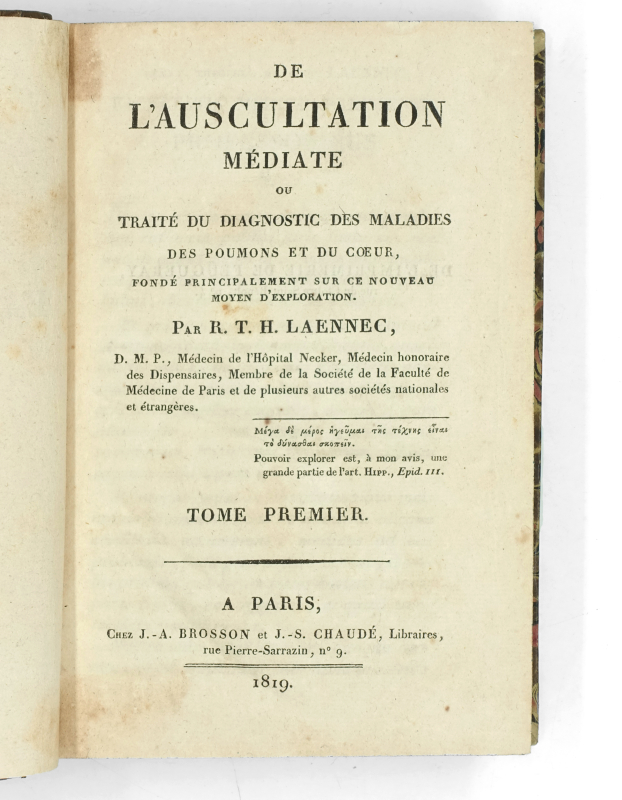
Édition originale, premier tirage.
La publication de cet ouvrage marque la première grande révolution dans l’étude des maladies de la poitrine. L’auscultation, à l’aide du stéthoscope, est en effet le premier procédé rigoureux et objectif pour l’examen d’un malade. Hippocrate avait décrit les bruits thoraciques, mais Laënnec butait sur le moyen de les amplifier pour améliorer la qualité de l’auscultation. Lors d’une promenade dans un jardin public, la contemplation d’un jeu d’enfants consistant à transmettre par une poutre le bruit d’un grattement à une de ses extrémités lui sert de déclic; il utilise aussitôt cette technique pour examiner un patient au moyen d’un cahier roulé. Très vite il acquiert la maîtrise de l’auscultation et classifie les symptômes.
« Laennec’s invention of the stethoscope provided the first adequate method for diagnosing diseases of the thorax, and represented the greatest advance in physical diagnosis between Auenbrugger’s percussion and Röntgen’s discovery of x-rays » (Norman). « Laënnec was undoubtedly the most prominent French internist of his day. His ingenious use of a roll of paper as a first stethoscope opened an entirely new field of physical diagnosis, and by this means he virtually created the physical diagnos of pulmonary diseases, giving clear, concise definitions of phtisis, pneumothorax, emphysema, etc. » (Heirs of Hippocrates).
« Laennec made his name immortal by his invention of the stethoscope in 1819 (at first only a cylinder of paper in his hands), and by the publication of the two successive editions of his Traité de l’auscultation médiate in 1819 and 1826. This work placed its author among the greatest clinicians of all ages and had better luck than Avenbrugger’s, for it was immediately taken and translated everywhere. It is the foundation stone of modern knowledge of diseases of the chest and their diagnosis by mediate auscultation » (Garrison, History).
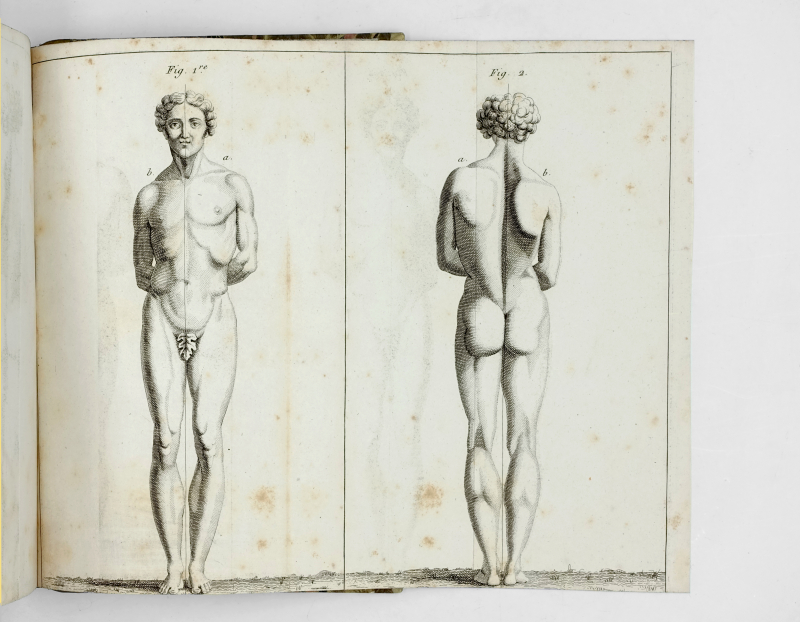
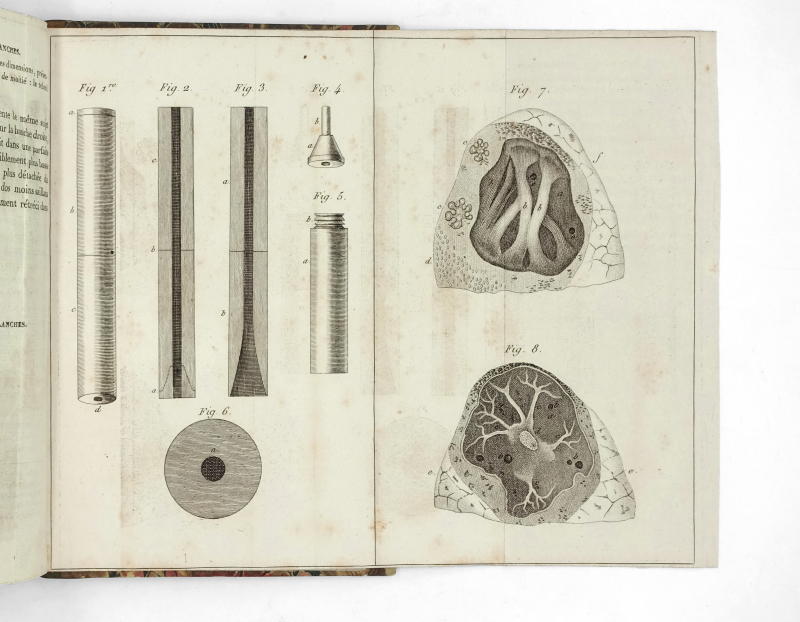
Les quatre planches montrent le stéthoscope, des pathologies des poumons, et des déformations de la cage thoracique.
Très bon exemplaire.