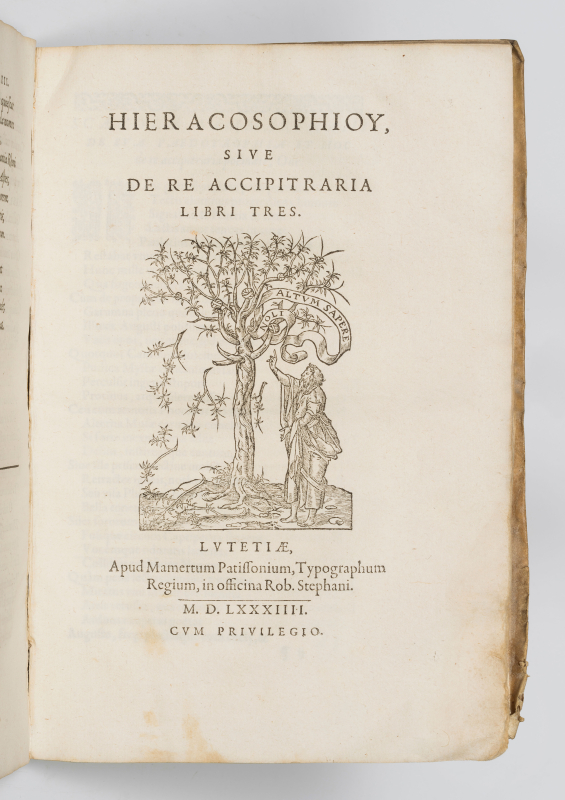
Thiébaud, 897; Souhart, 461; see Schwerdt, II, 261 (other editions); Frank, II, 288; Renouard, Estienne, p. 185; Ronsil, 3516.
First complete edition of one of the most famous and longest of De Thou’s poems, a didactic verse in about 2780 hexameters devoted to hunting with falcons and other birds of prey.
Composed in three “libri” and addressed to François, Duke of Alençon, Anjou and Brabant (1555-1584), the youngest son of the late King Henri II and Catherine de’ Medici, and brother of the reigning King Henri III, this learned didactic poem on falconry was written by the young bibliophile and humanist Jacques Auguste de Thou (1553-1617). Versified in Latin hexameters, de Thou studies the different species of birds of prey and gives lessons to guide the choice of falconers.
Book 1 discusses the various kinds of birds of prey used in falconry and how to choose one, book 2 discusses their care and feeding, training and the practice of hunting with them, and book 3 discusses their medical care.
“De Thou was not yet thirty when he composed this elegant poem, which reveals his author’s in-depth knowledge of everything to do with falconry” (see Thiébaud).
The poem ends on p. 95, with the next page containing an “important” (Harting) note about the various kinds of birds of prey used for falconry and giving their French and Latin names. The last six leaves contain Thou’s 11-page letter to Philippe Hurault (1528-1599), French chancellor under King Henri III, on the subject of falconry, and on the last page the corrigenda. The preliminaries contain laudatory verses by Scévole de Sainte-Martin and Pierre Pithou.
Falconry was so popular in France from the reign of François I to that of Louis XIII that it can be considered the national pastime of the French nobility, as well as the prominent clergy, military figures and politicians in that period, 1515-1643.
This edition was printed by Mamert Patisson, who in 1574 had married Denise Barbé, the widow of Robert II Estienne.
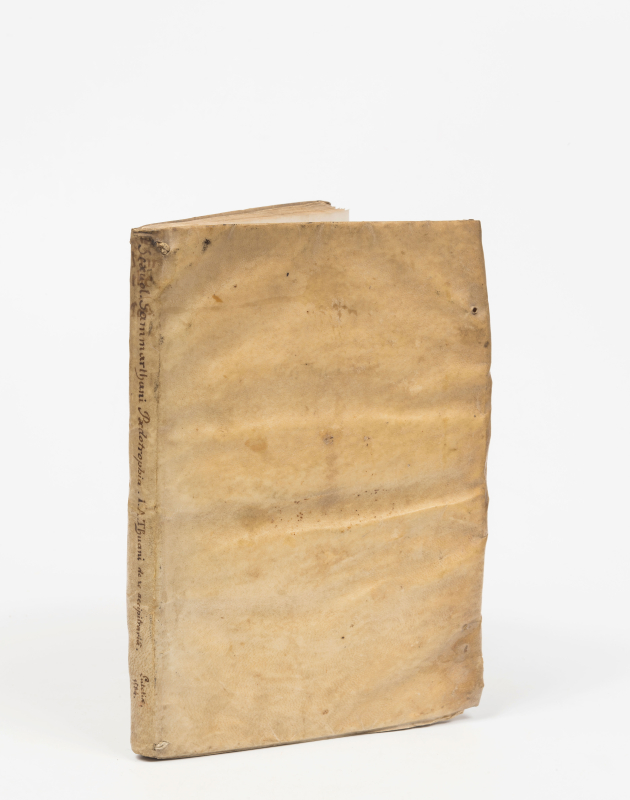
Occasionally the Hieracosophioy was attributed to the poet Sainte-Marthe and sometimes works of both poets are found bound together, as is the case with this copy.
[Bound in at head:]
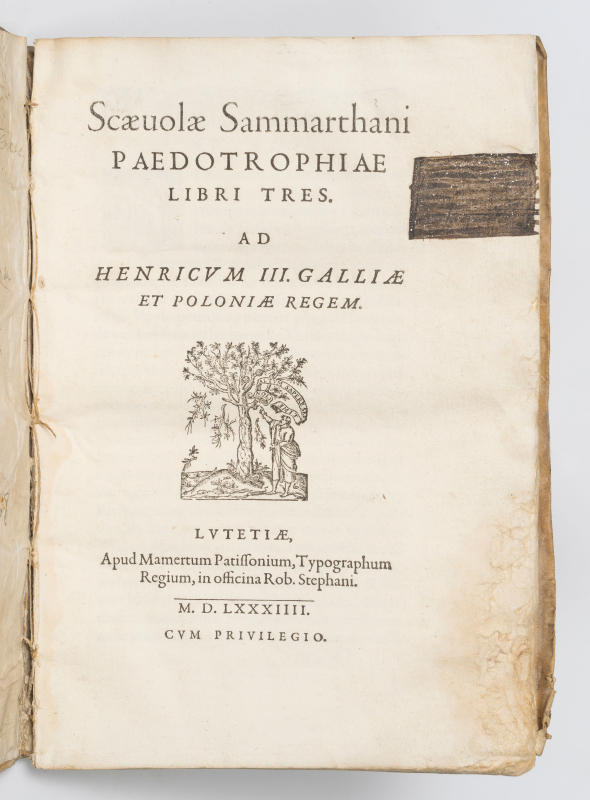
SAINTE-MARTHE, Scévole de. Paedotrophiae libri tres. Paris, Mamert Patisson, 1584. 4to, 2 unn.ll., 60 pp.
First edition, very rare. It was only translated into French in 1698 under the title La Manière de nourrir les enfants à la mamelle. An English translation was printed in 1710 under the title The Art of Nursing and Rearing Children.
It contains a long poem on the way on how to nurse children, as a reaction by Scévole de Sainte-Marthe to the illness of one of the poets’ sons.
Light waterstain to lower right corner.
Provenance : old ownership inscription scribbled out on the title of Paedotrophiae – Hubert Lebaudy (bookplate)