Nissen, ZBI, 1470; VD 17 23:321034Z; cf. Lipperheide, 2908 (1659 ed.).
First edition of this magnificent illustrated work dealing with the training, exercise and veterinary care of horses.
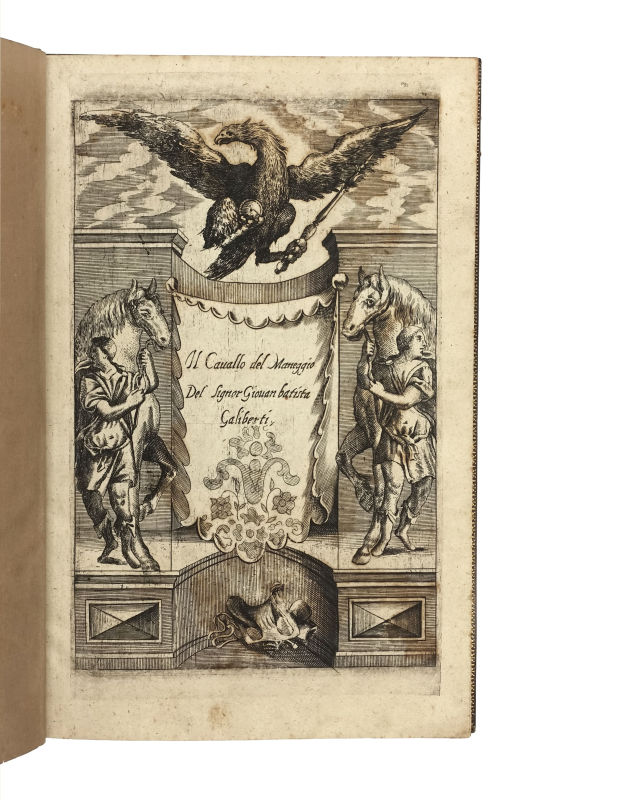
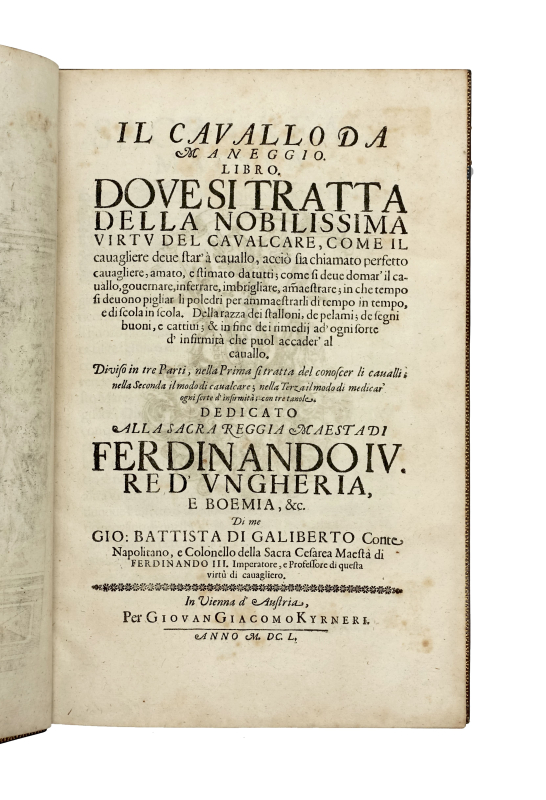
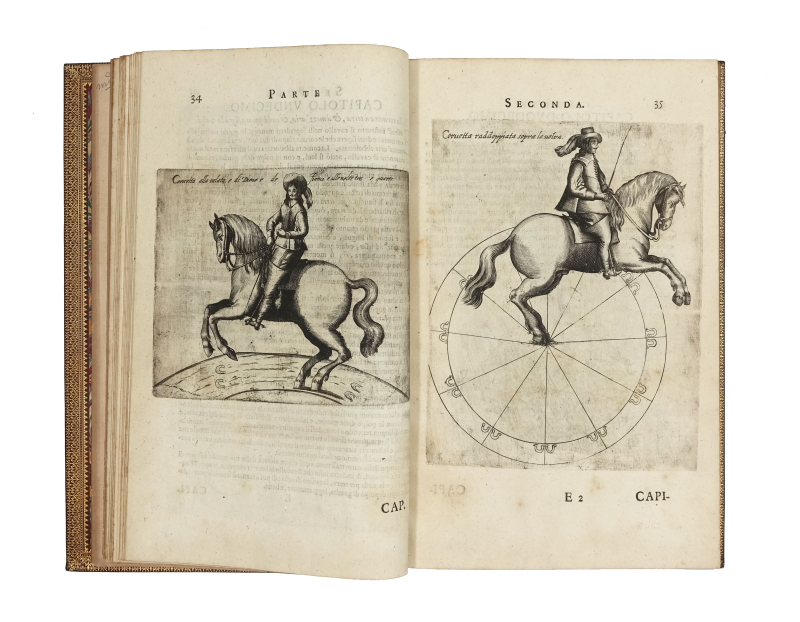
The Neapolitan Count Giovanni Battista Galiberto, colonel and master of horsemanship in the service of Ferdinand IV, King of Hungary and Bohemia and son of Ferdinand III, to whom the work is dedicated, published this magnificent work in Vienna in 1650. The book is enriched by interesting full-page copperplate engravings, most of which depict the various school figures
Il Cavallo da maneggio… (the school horse) is divided into three parts. The first part is devoted to the training of horses. The second deals with the best way to ride them, and the third with horse diseases and veterinary care.
« As for Italy, it is well known that during the Renaissance, the Italian culture exercised a very important role not only in the fields of literature and art, but also of horsemanship. In the sixteenth century, the first equestrian treatises were printed in Italy and riding schools and equestrian academies were established, as well as that the majority of the horsemen who were active in the courts of Europe were Italians. And the first book about horseback riding printed in Vienna was by an Italian author, who wrote in Italian and not in German. He was Giovan Battista Galiberto, author of Il cavallo da maneggio (The school horse, 1650). His work is certainly interesting. Poscharnigg analyzes it in detail, highlighting some very significant parts of it, such as the description of an exercise, named “cantone, o angolo” (i.e. corner), which was very similar to the “shoulder-in” described by La Guérinière a century later. » Giovanni Battista Tomassini, worksofchivalry.com ; the Austrian art of riding.
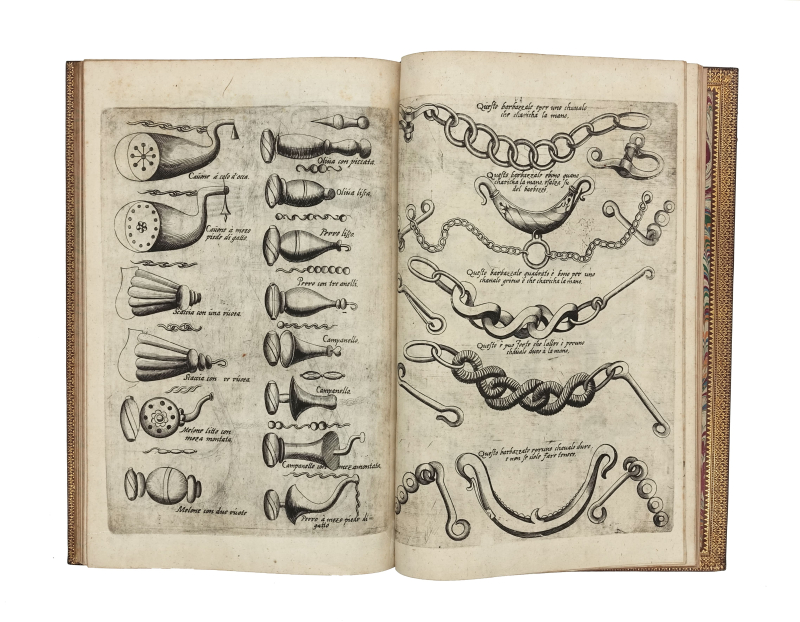
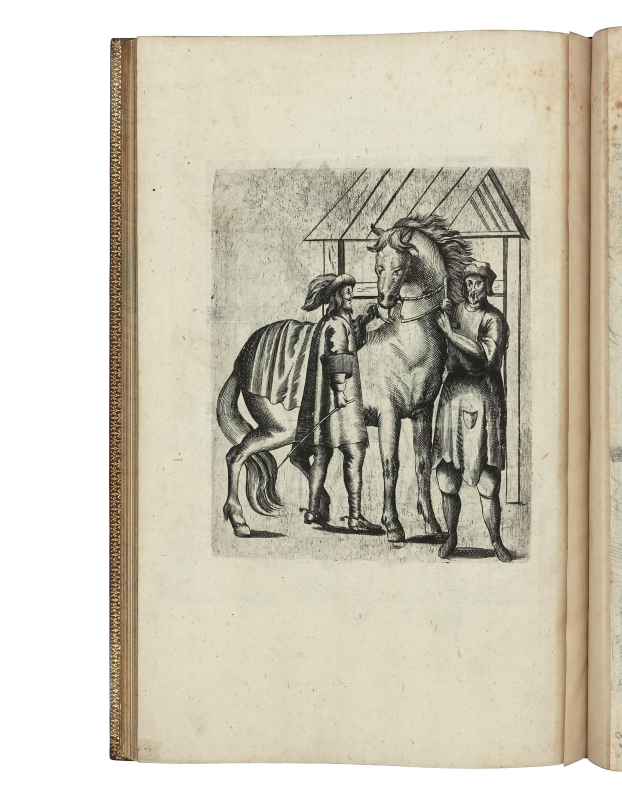
The superb engraved plates depict scenes of horse training and equestrian equipment, including bridles, spurs and harnesses.
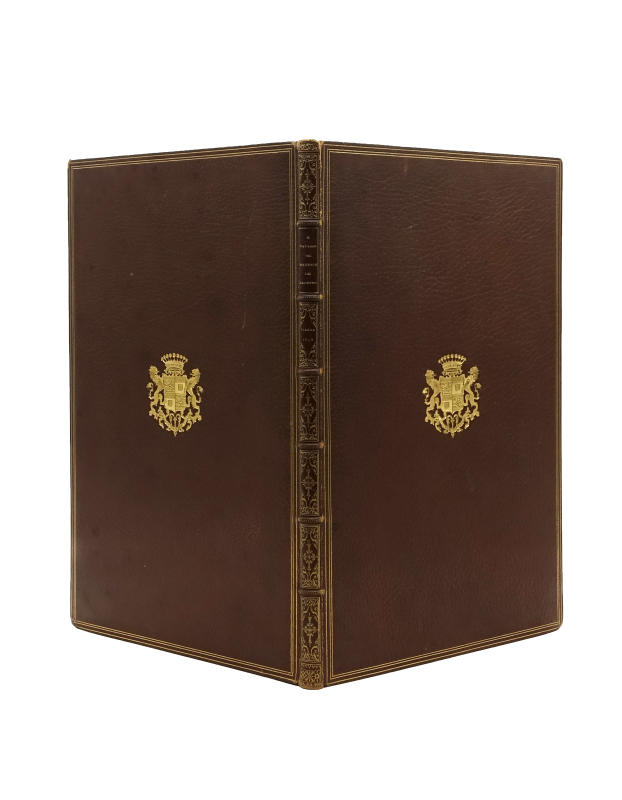
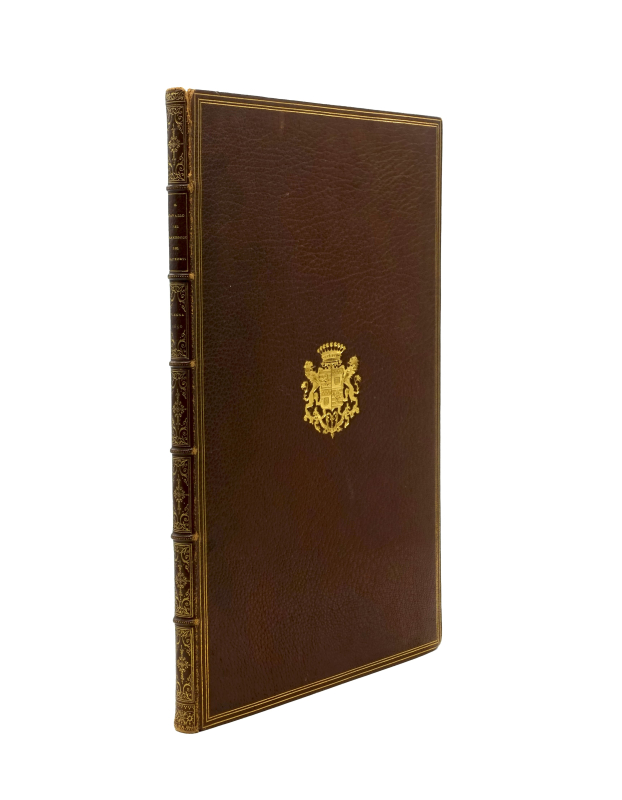
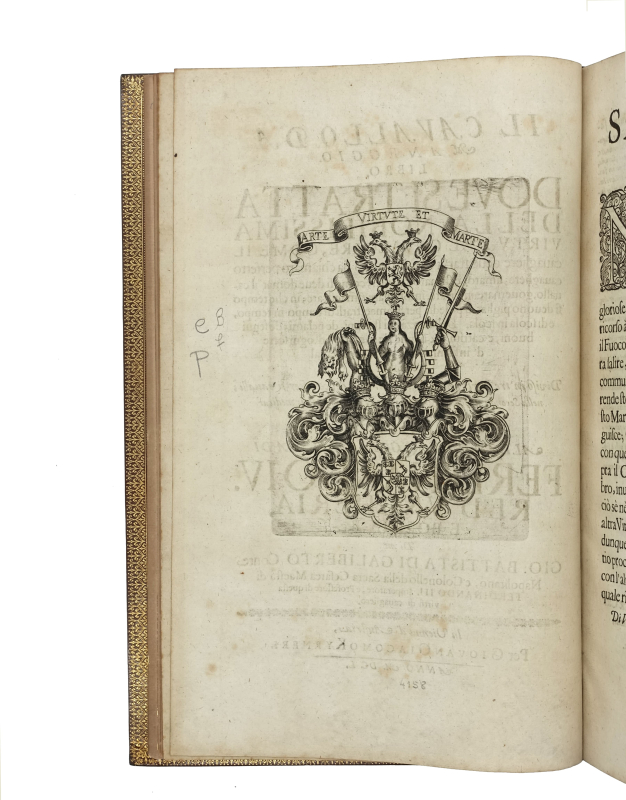
The upper hinge is worn, but this is a fine copy bearing the arms of Count Pierre de Mornay Soult de Dalmatie (1837–1905), later Marquis de Mornay-Montchevreuil, grandson of Marshal Soult, with his motto ‘Arte et Marte’. His library, dispersed in 1874, contained numerous works on military art, horsemanship and heraldry, often bound by the great bookbinders of the time. A very fine copy, beautifully bound in morocco by Hardy-Mesnil.
Provenance: Count Pierre de Mornay Soult de Dalmatie (1837–1905) (coat of arms); Biblioteca do Jockey Club de S.Paulo (engraved bookplate).