Antonio, Nicolás, vol. 1, page 656 ; Gallardo, Bartolomé José, vol. 3, no. 2575, Palau, 122861, USTC 5029502 ; REIG-FERRER, Abilio, « Precursores de la ornitología doméstica en España: Gregorio de los Ríos y su “Ruiseñor” (1592), y el “Conocimiento de las diez aves menores de jaula” (1604) de Juan Bautista Xamarro », Argutorio: revista de la Asociación Cultural «Monte Irago», año 26, n.º 52, 2024, p. 95-110.
First edition. Probably financed by the bookseller Pedro de la Torre, who is thought to have had between 700 and 1,000 copies printed.
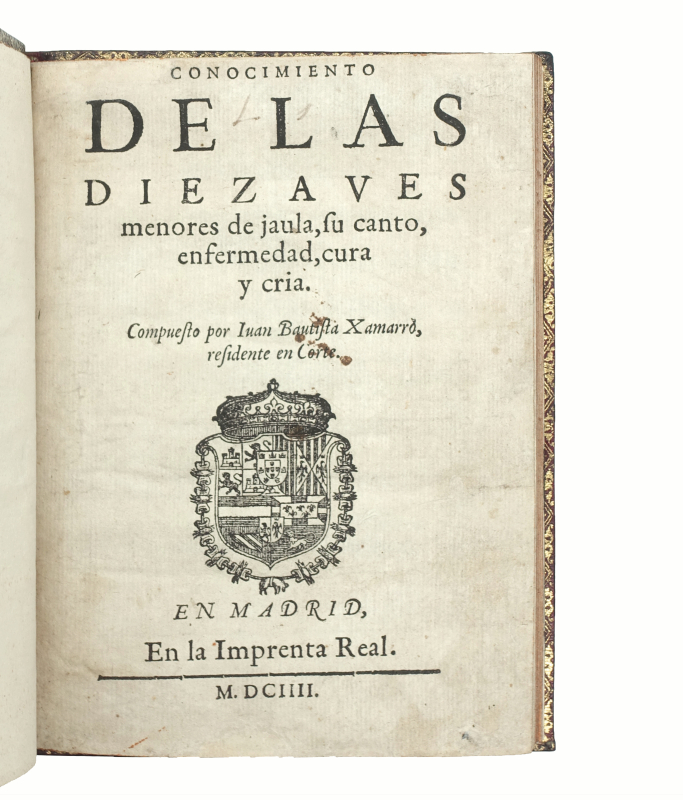
An important Spanish treatise on the knowledge, breeding and care of songbirds, written by Juan Bautista Xamarro. Born in Naples and based in Madrid, he was a barber-surgeon and practised amongst the pages of King Philip III (barbero de los pajes de S. M.). His treatise was printed in Juan Flamenco’s workshops in 1603, under the name of the Imprenta Real, and published in 1604. The text had already been composed in 1597, the year Xamarro presented the future King Felipe III with a treatise devoted to the rearing of caged birds and the treatment of their ailments. A privilege granting the author exclusive printing rights for ten years had been issued to him on 27 September 1597.
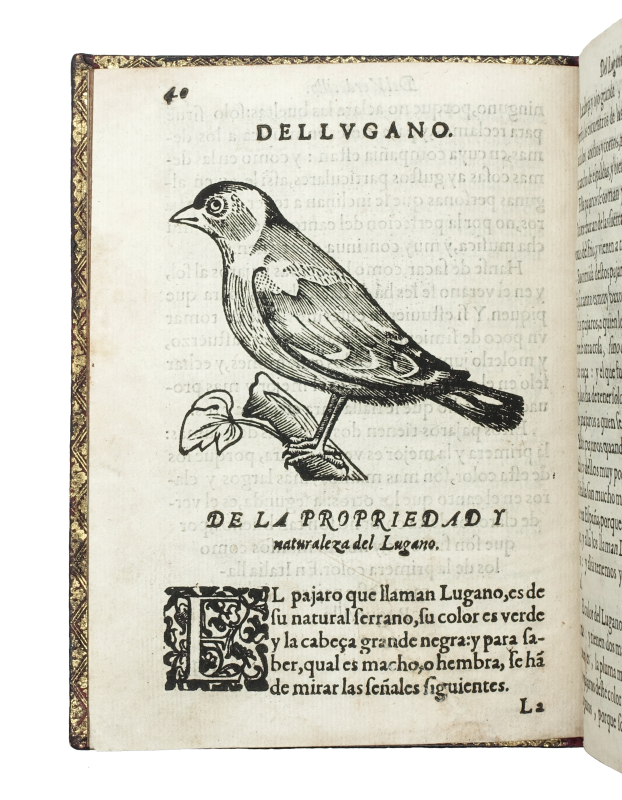
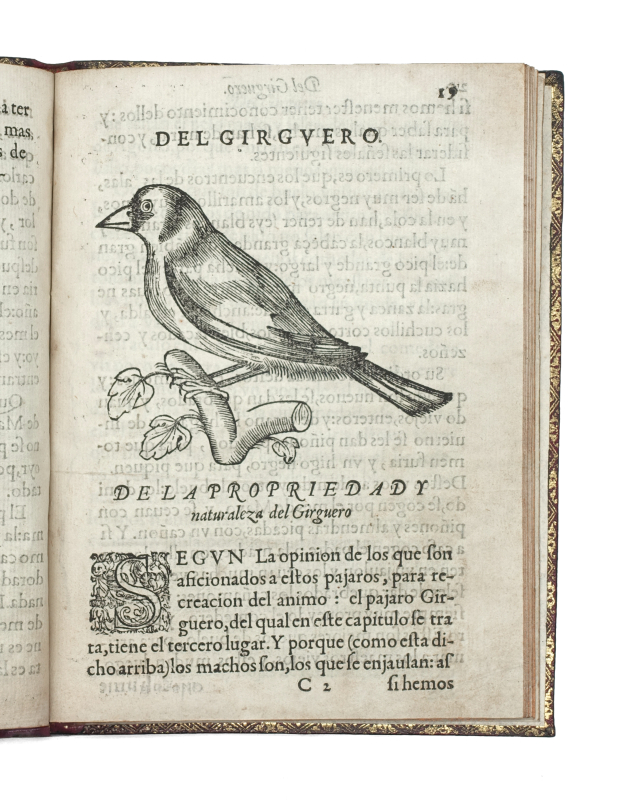
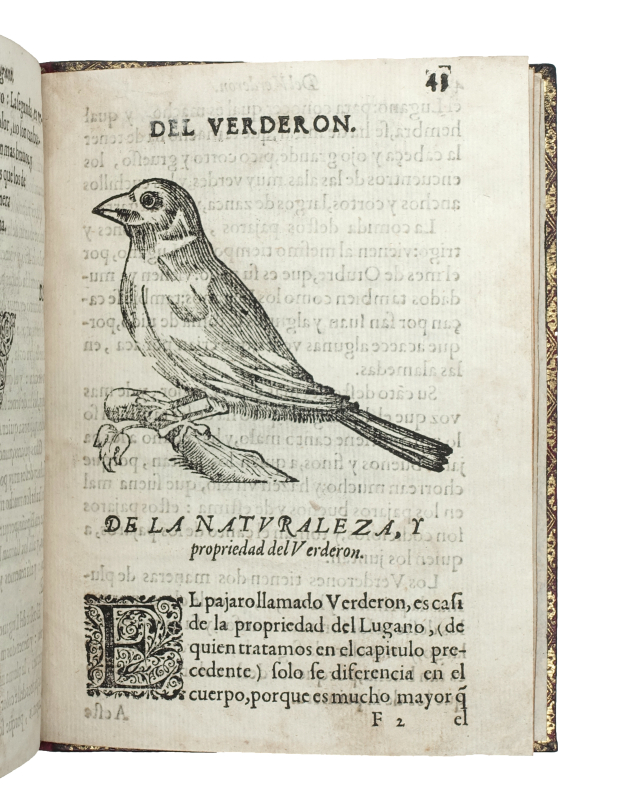
The text focuses on 10 birds, all of which are depicted in woodcuts: the nightingale (ruiseñor), the linnet (pardillo), the goldfinch (jilguero), the canary (canario), the calandra lark (calandria), the chaffinch (pinzón), the cini serin (verderillo), the siskin (lúgano), the greenfinch (verderón) and the blue rock thrush (solitario).
Xamarro endeavours to describe in detail their appearance, diet, suitable cages, methods of capture, song, breeding and care, diseases and their remedies, the different plumage varieties as well as moulting, but also their behaviour and its impact on their song.
Xamarro’s text, one of the first of its kind in Spain, stands out above all for its focus on animal welfare; to this end, he emphasises the environment (the cage must be of a suitable size and adapted to the species of bird), diet, remedies and objects that allow the birds to entertain themselves and provide them with comfort (notably mirrors or pieces of fabric). His recommendations reflect a genuine concern for their health and well-being, with the aim of keeping them in good condition and happy for as long as possible.
Xamarro’s conclusions differ from those of certain naturalists, particularly regarding the interpretation of the emotions underlying birdsong, which he analyses as an expression of joy rather than sadness
Whilst he is not the first European author to take an interest in caged birds, Xamarro provides one of the earliest Spanish contributions to this field. His text was drawn upon, sometimes without citing his source, by several later authors, notably Andrés de Marcuello (1617) and Jerónimo de Huerta (1624). A significant portion of it was also used by Antonio Sánchez Tórtoles in El entretenido (1671), before the work was republished and expanded in the 18th century.
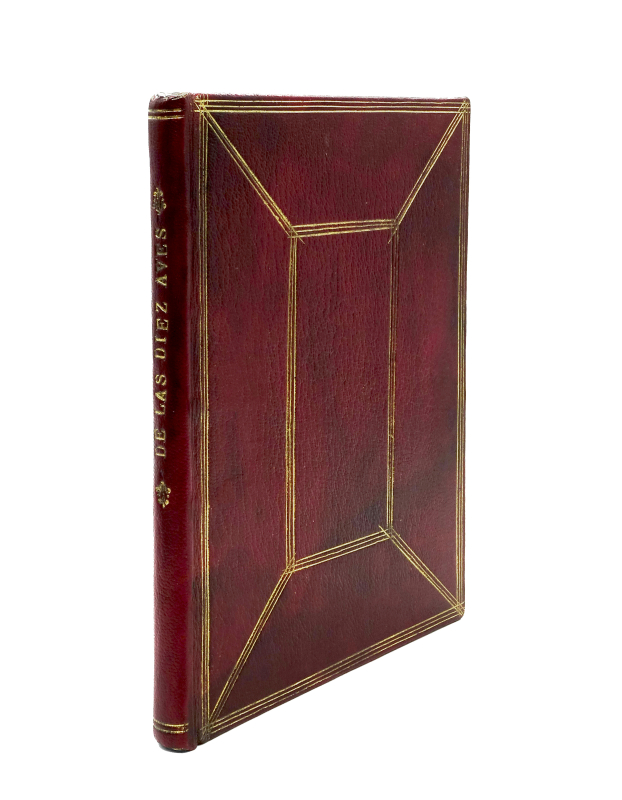
A fine copy with a few minor stains, some ink marks in the text and annotations on the reverse of the table leaf, which in this copy is bound after the title leaf.
This is a relatively rare volume; the USTC lists only 14 copies, only one of which is held outside Europe (at the Hispanic Society in New York). According to auction reports, only one copy, containing just nine engravings, was sold at Christie’s in 2014.