
VENDU
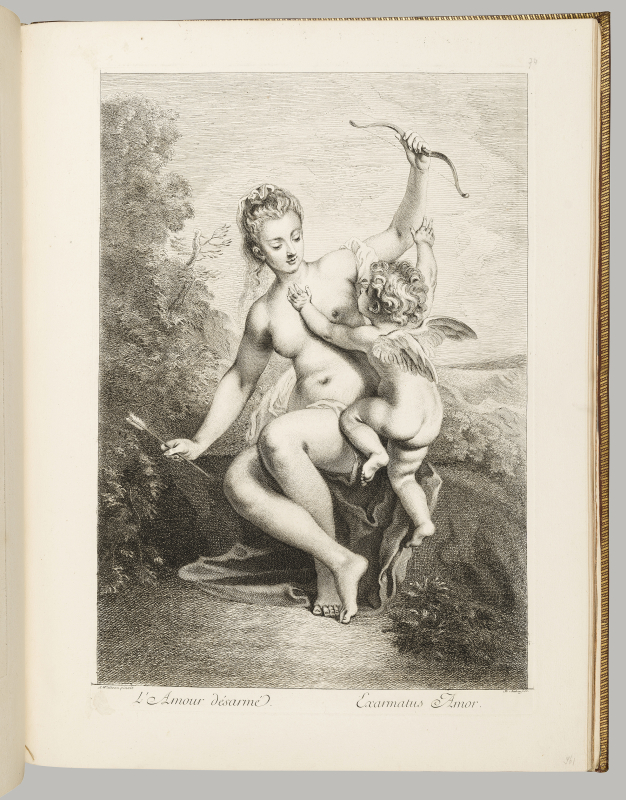
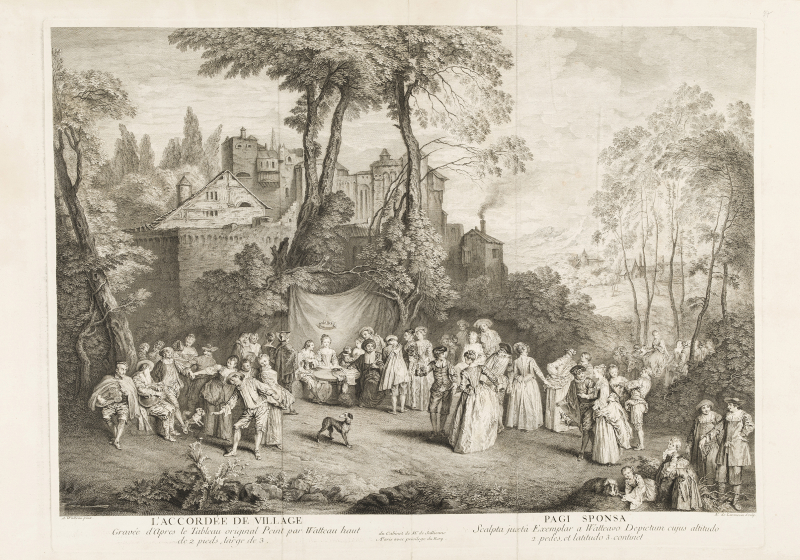
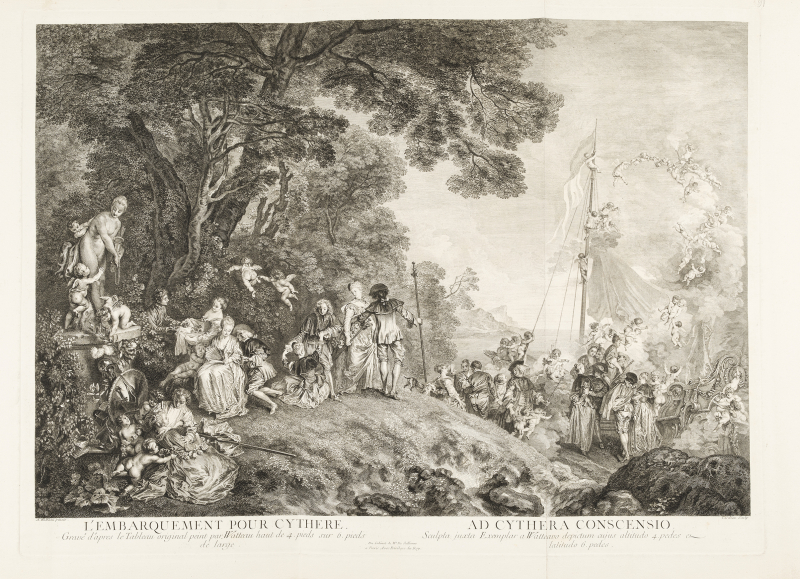
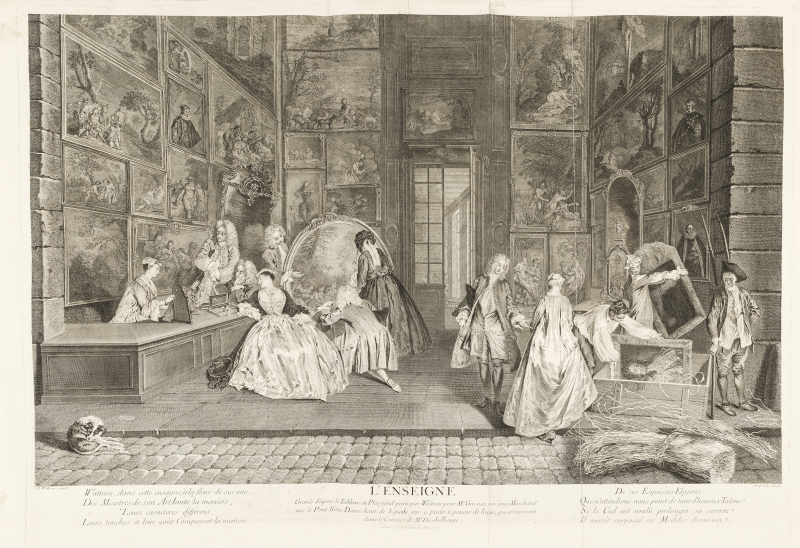
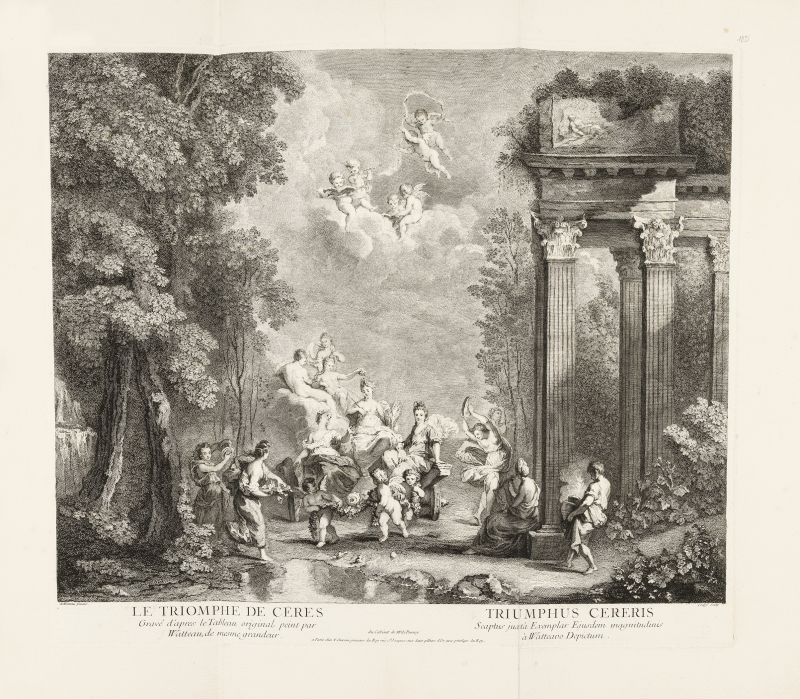
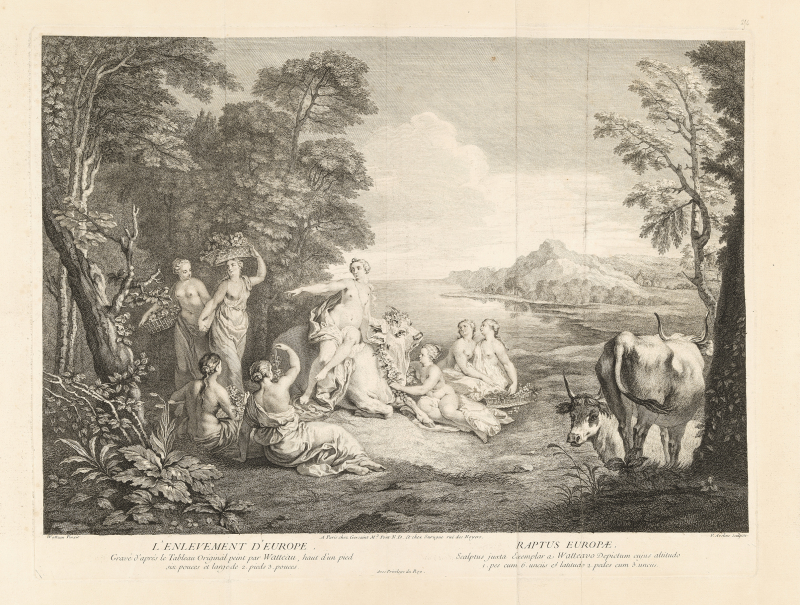
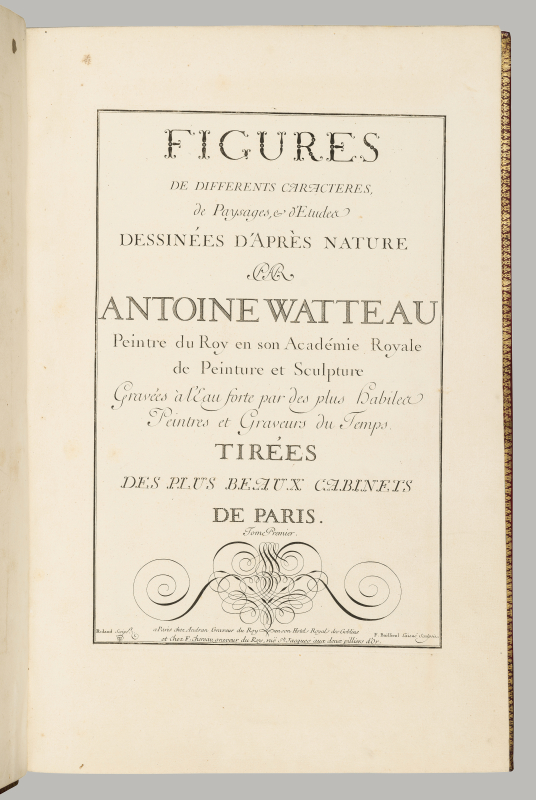
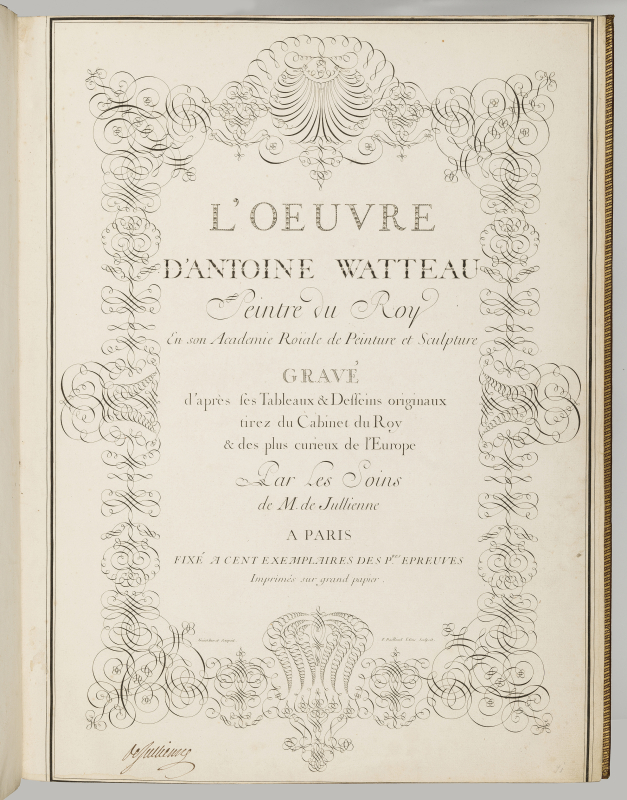
2 folio volumes — L’Œuvre d’Antoine Watteau, peintre du roy en son Academie roïale de peinture et sculpture : gravé d’après ses tableaux & desseins originaux, tirez du Cabinet du Roy et des plus curieux de l’Europe, par les soins de M. de Jullienne. Paris, [1735]. 2 large folio volumes.
1 in stock
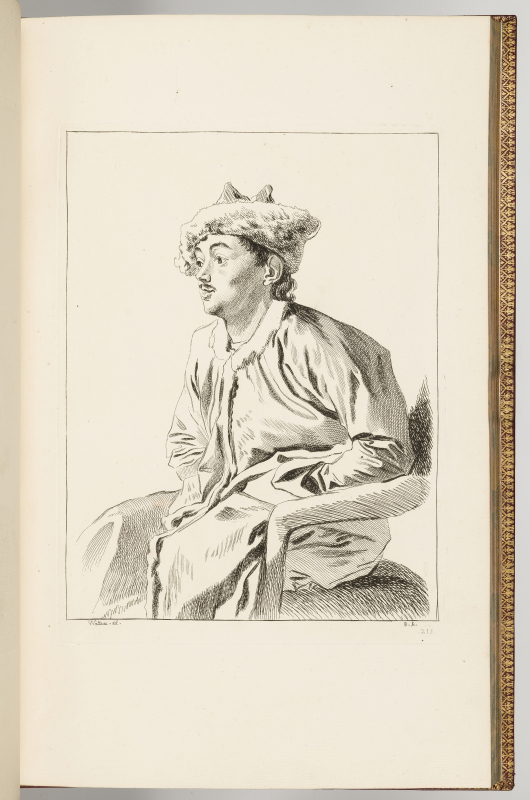
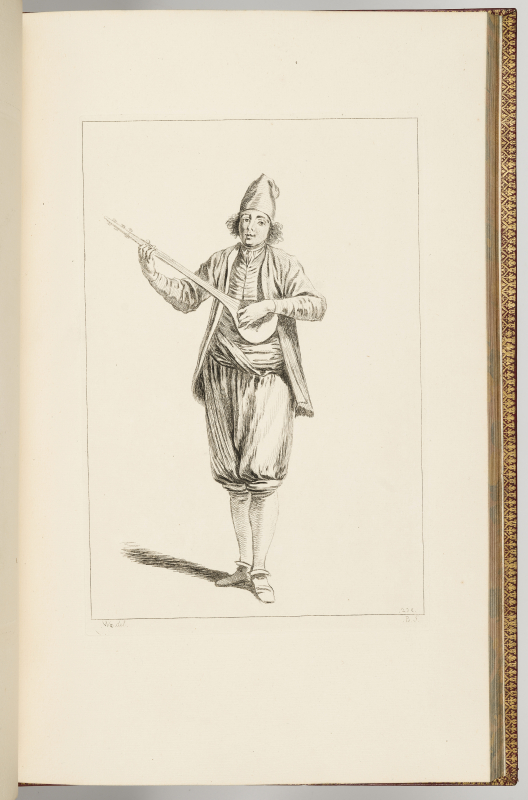
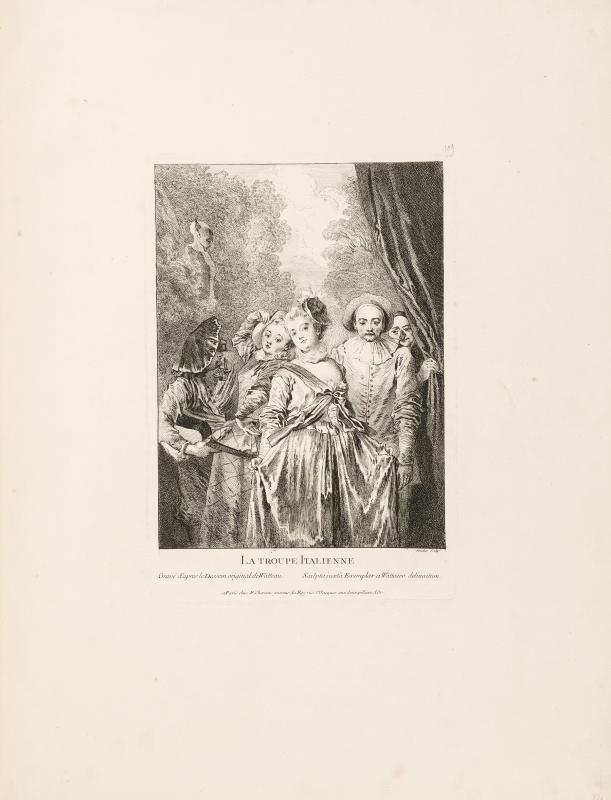
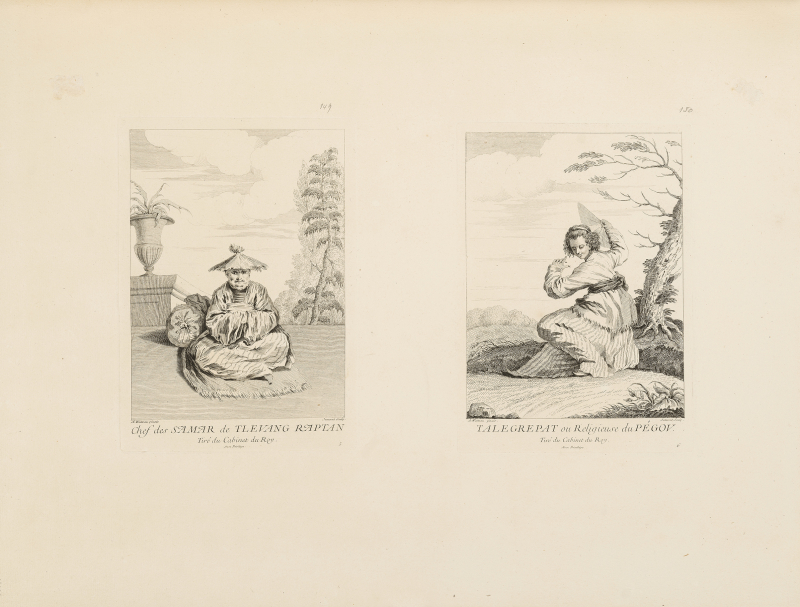
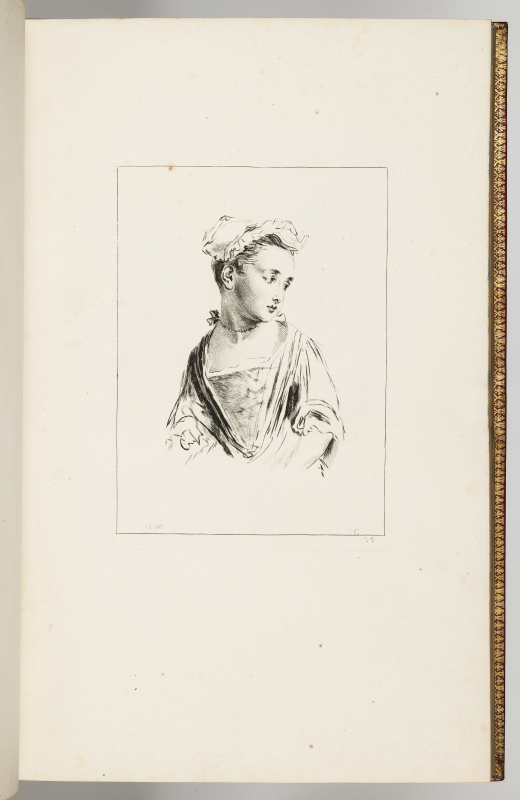
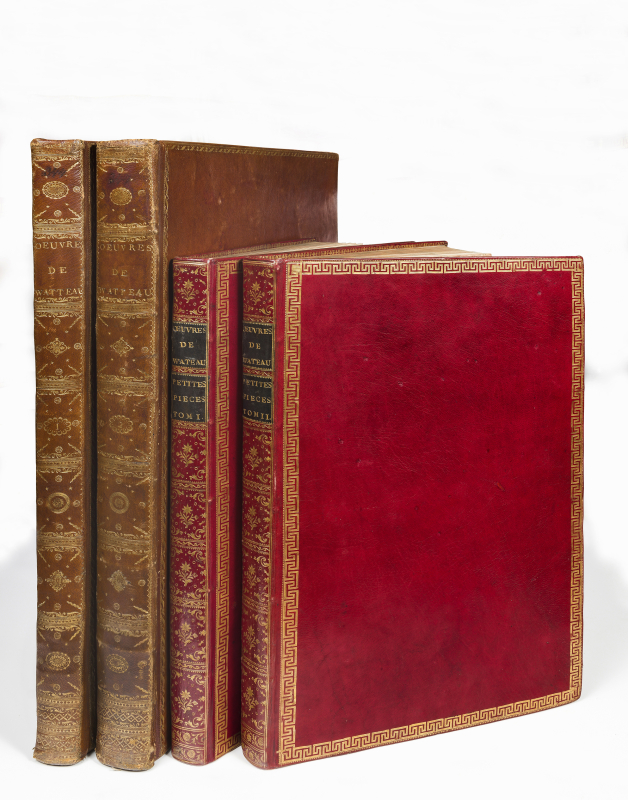
1- Figures de différents caractères: 351 plates. 2 folio volumes (483 x 318 mm): volume I: 1 engraved title page, 1 engraved preface page, 1 engraved epitaph in Latin verse, 1 engraved epitaph in French verse, 2 engraved pages for the Abrégé de la vie d’Antoine Watteau (by Jean de Jullienne), 1 engraved portrait of Watteau, 132 engraved plates numbered 1 to 132, some printed two to a sheet. — volume II: 1 engraved title page, 1 allegorical frontispiece designed and engraved by François Boucher, 218 engraved plates numbered 132 to 350, some printed two or four to a sheet; plus one unnumbered engraved plate between plates 170 and 171. Contemporary red morocco, gilt roulette and Greek tool framing around covers, flat gilt spine, gilt turn-inns, gilt edges on marbled paper.
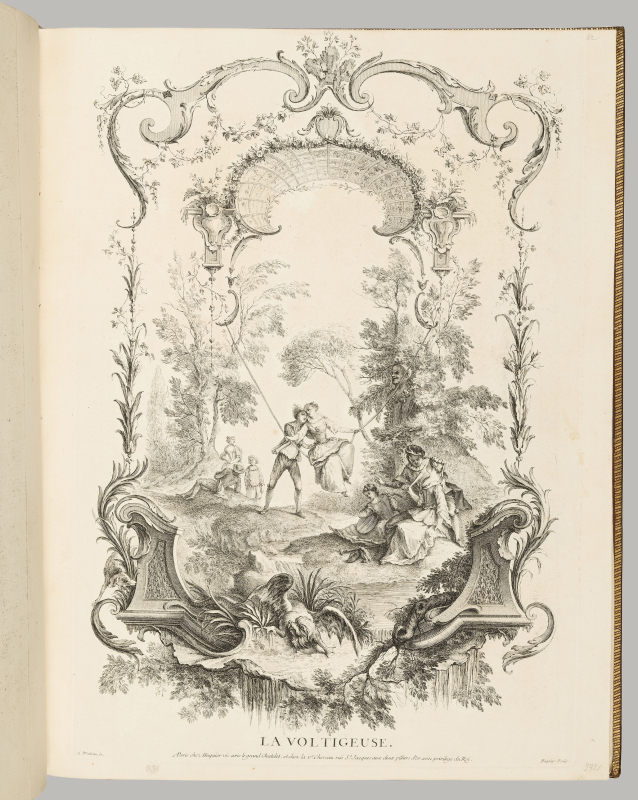
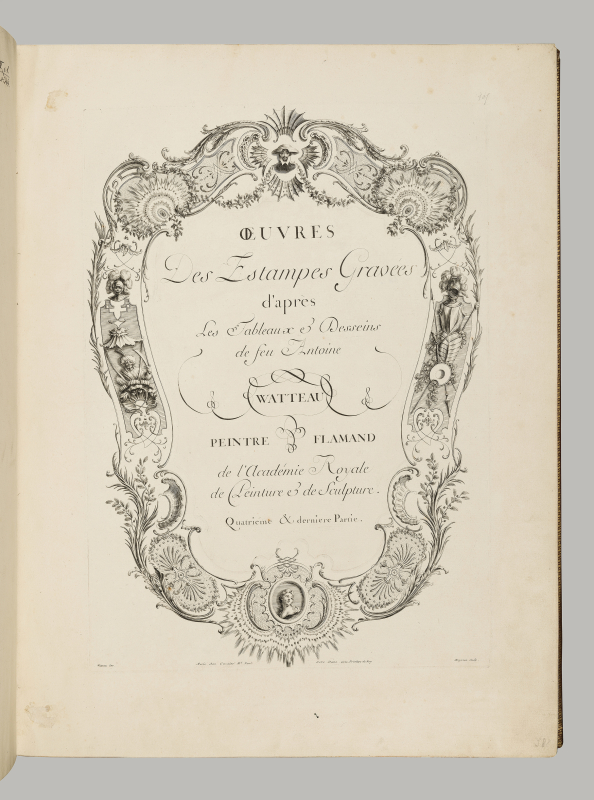
2- L’Œuvre d’Antoine Watteau: 266 engraved plates. 2 large folio volumes (950 x 458 mm). Volume I: 1 engraved title, 1 l. of engraved text (allegorical fable by Abbé de La Mare ‘L’Art et la Nature’), 102 plates engraved [sometimes 2 or 4 on the same leaf; including two complete series from folios 38 to 42: ‘Figures Françaises et comiques’, 1 engraved title and 11 plates – and ‘Figures de mode’, 1 engraved title and 7 plates]. — volume II: Works of engraved prints, based on the paintings and drawings of the late Antoine Watteau. Fourth and final part. Paris, Gersaint, undated. 1 engraved title and 164 plates engraved. Contemporary light brown morocco, gilt roulette framing, flat decorated spine, interior roulette and on the cuts, gilt edges, edged cases.
Cohen de Ricci, 1054-1065 : « Ce somptueux recueil imprimé en 1735 est un des livres les plus beaux et les plus rares du XVIIIe siècle. Des 100 exemplaires qui furent tirés il y a près de trois siècles, à peine une trentaine existe encore aujourd’hui ».
Extremely rare first edition. The ‘Recueil Jullienne’ preserves the memory of Antoine Watteau’s work by bringing together more than 600 etched and engraved plates. One of the most complete copies, containing 617 plates. Superb copy bound in red morocco.
Jean de Jullienne (1686-1766), the King’s official dyer and a wealthy manufacturer in the Gobelins district, was one of Antoine Watteau’s (1684-1721) closest supporters.
In 1717, four years before Watteau’s death, Jean de Jullienne undertook to reproduce the artist’s drawings—using etching and engraving—to create an impressive collection intended to ensure the posterity of his work. Jullienne thus rivalled the banker Pierre Crozat, who, around 1730, undertook to have the collections of paintings belonging to the king, the Duke of Orléans and his own cabinet engraved at his own expense (the Crozat set was published in 1729 and 1742).
Jullienne called upon some fifteen talented engravers of the time for the Figures. Jean Audran and François Boucher produced the largest number of prints; 119 pieces are attributed to the young Boucher (aged 19), to which are added nine other unsigned plates that are also attributed to him. The other artists were Benoît Audran, Laurent Cars, the Comte de Caylus, Charles-Nicolas Cochin, Louis Desplaces, Charles Dupuis, Edme Jeaurat, François-Bernard Lépicié, Nicolas Charles de Silvestre, Henri Simon Thomassin, Pierre-Charles Tremolière and Carle Vanloo.
The plates were printed by Jullienne at the Gobelins Manufactory and compiled into two volumes, published by Audran and Chéreau in 1726 and then in 1728. The print run was limited to only 100 copies.
A beautiful copy, bound in red morocco, and particularly fresh, most of the pages printed on strong laid paper, without foxing.
To compose the second part, entitled L’Œuvre, Julienne called on additional artists, and a total of 36 professional engravers worked on the project, including N.-H. Tardieu, Maurice, a specialist in arabesques, Bernard Baron, François Foullain, the Liotard brothers from Geneva, Baquoy, Louis Crépy, Nicolas de Larmessin, H. Thomassin, Jean Moyreau, Gabriel Huquier, P. Aveline, François Chédel, Jacques Ph. Le Bas, Marie-Jeanne Renard du Bos, Louis Jacob, and Etienne Fessard. Watteau himself engraved ten pieces, which were retouched by professional engravers.
The composition of this second part varies depending on the copy, and the plates are not always placed in the same order, as may be the case in copies bound at the time.
“It is very difficult to give the exact composition of this collection. H. Cohen describes R. Schuhmann’s copy as containing 271 plates; this was also the number of plates in J. de Jullienne’s copy, which is kept at the Bibliothèque de l’Ecole des Beaux-Arts in Paris, but now contains only 248. The copy in Versailles, bearing the royal coat of arms, contains 268 plates, and the copy in the Bibliothèque nationale contains only 244. The copy belonging to Jacques Doucet, bequeathed to the Bibliothèque d’art et d’archéologie, contains 265 plates. Other copies are either very incomplete [Bull. Morgand, new series, I, no. 885, 232 plates; A. Beurdeley, 176 plates; H. Destailleur, 227 plates] or augmented with plates which, as Messrs. Vuaflart and Dacier [Jean de Jullienne et les Graveurs de Watteau au XVIIIe siècle. 1922-1929], were never part of the collection; such was the case with the L. de Montgermont sale of 1931, with 275 plates”. (Kunding, L’Œuvre gravé d’Antoine Watteau. Description d’un exemplaire inconnu. Geneva, circa 1948).
Cohen (col. 1054) and Edmond de Goncourt (Catalogue raisonné de l’œuvre peint, dessiné et gravé d’Antoine Watteau. Paris, Rapilly, 1875) also list the differences in composition between the known copies.
Exceptional copy bearing Jullienne’s autograph signature on the title page. This justification was promised to subscribers in the 1734 prospectus. The Esmérian copy (no. 107 of the third sale, 6 June 1973) also bore this signature.
This extremely rare first edition is to be distinguished from the second edition, which was published in 1740 in Paris by Huquier in one folio volume; it contains only 7 preliminary engraved leaves and 351 plates.
Provenance: Stroganoff (with engraved armorial book plate and library mark in pen on the reverse of the flyleaves). Of this wealthy family of Russian patrons and collectors from Saint Petersburg, Alexander Sergeyevich Stroganoff (1733-1811), a friend of the painter Hubert Robert, was the most prestigious – Rossignol: bookplate.
Figures:
– I: minor marginal wormholes; rare small marginal stains (on plates 69 and 76, minimal stain on the engraving); margins of the engraved text pages slightly darkened. Corners very slightly bumped.
– II: without the introductory engraved warning leaf; faint foxing on some plates. F. pl. 176-177 bound upside down; small watermark on pl. 214; pl. 260, stain on the engraving. Slight ink stains on some plates.
Oeuvres:
– I: Missing, at the beginning of the volume, the plate engraved with the portraits of Watteau and J. de Jullienne. Traces of paper glued to the left corners of the plates. Some plates cut short at the bottom. On the verso of ff. 13 and 34: Russian dry stamp with handwritten pencil notation. Pl. 98, small marginal tear previously restored. The 38th plate (‘Louis XIII…’) is in width rather than height. At the top of the spine, notation in pen.
– II: some foxing; pl. 194, small stain; the body of the volume is slightly detached from its binding at the top, with reinforcement stitching at the end of the volume.
– Foxing on some plates. Tiny stains and rubbing on the bindings.

Monday to Saturday
10am – 1pm and 2:30pm – 7pm
(6pm Monday and Saturday)
© 2023 All rights reserved.