Bibliotheca Walleriana, 8159; Nat. Libr. of Medicine, Eighteenth-Century Books, p. 425.
Unique edition of this illustrated catalogue of the first private museum of surgical and medical instruments, founded by Father Ippolito Rondinelli.
This medical and surgical collection of Father Rondinelli, a Benedictine monk, was assembled at the monastery of San Vitale in Ravenna.
Don Mauro Soldo, the monastery’s lettore, compiled the catalogue by following the structure of the human body, section by section: he describes the instruments, their origin and use, serving to treat the head — with trephines and instruments for the senses —, then the thorax, the abdomen, the genital organs and the limbs.
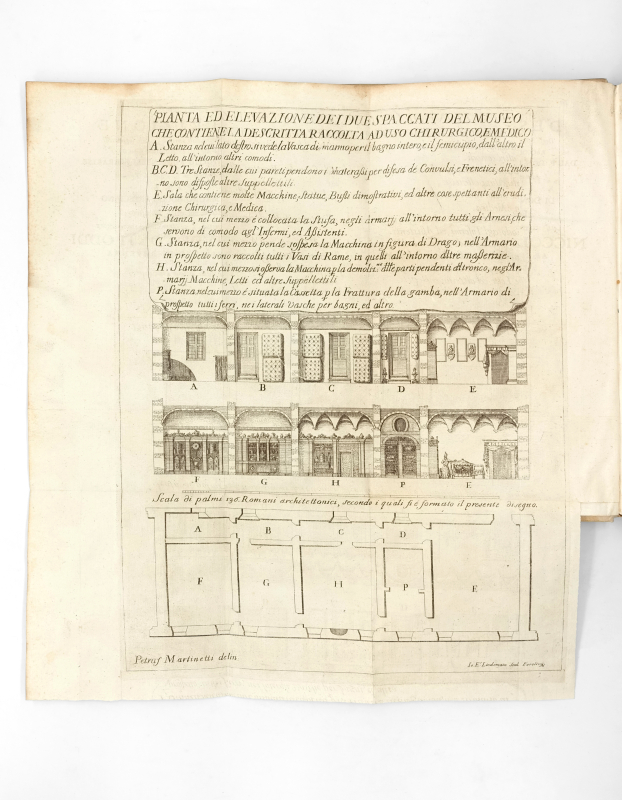
The volume opens with an interesting fold-out map describing the original layout of the museum within the monastery of San Vitale, listing the allocation of the rooms and their contents.
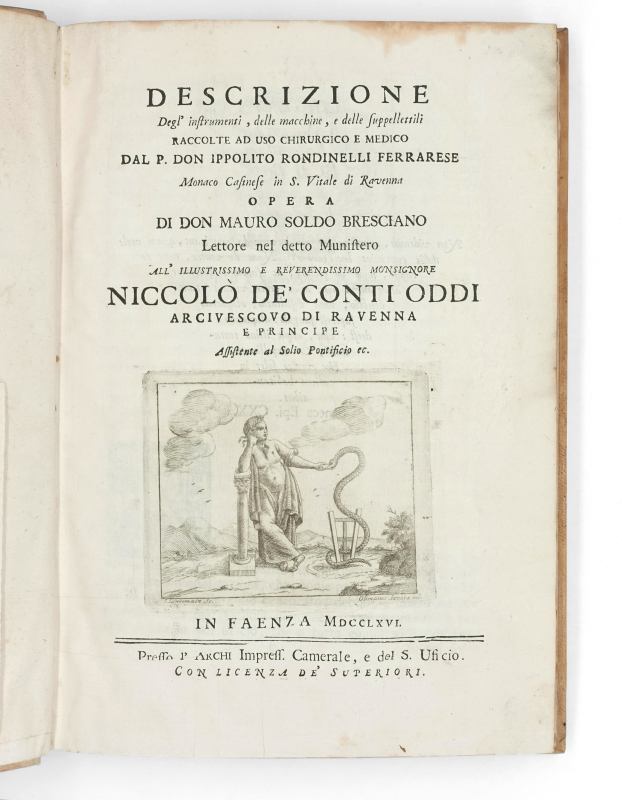
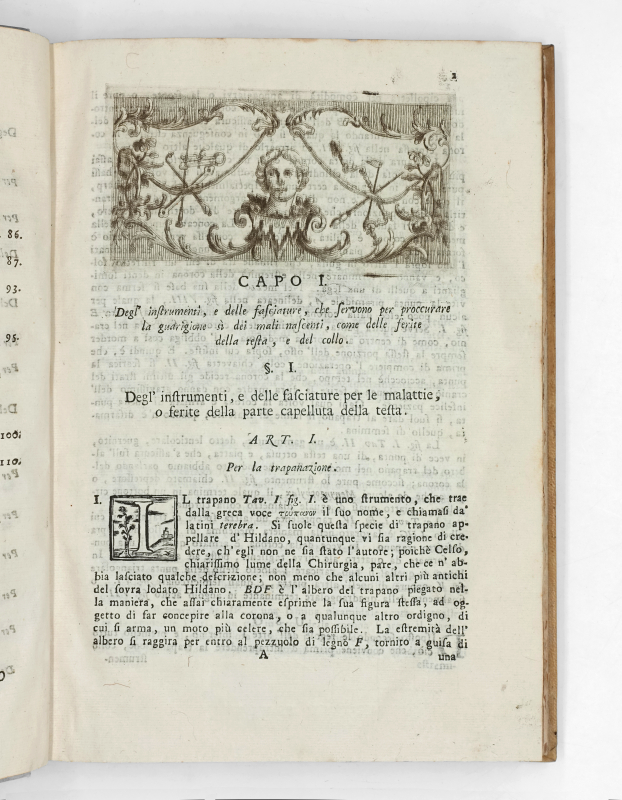
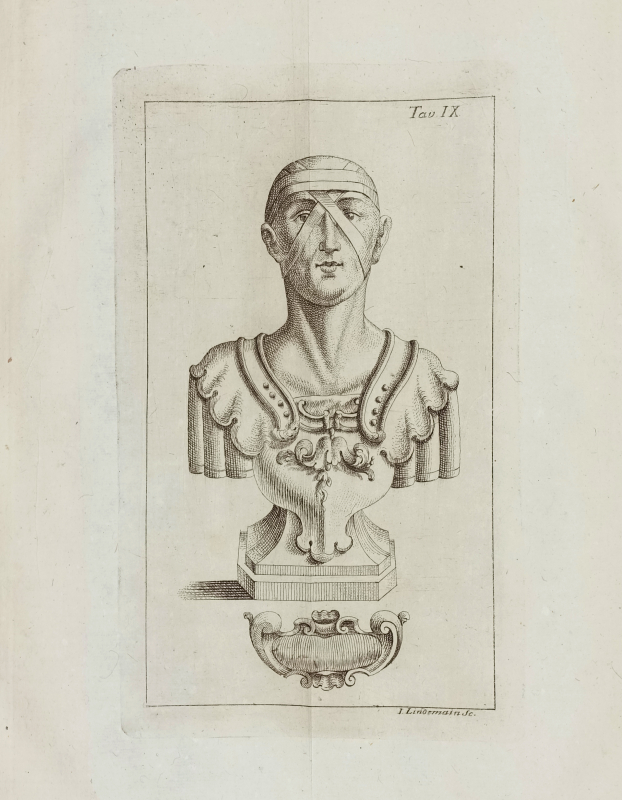
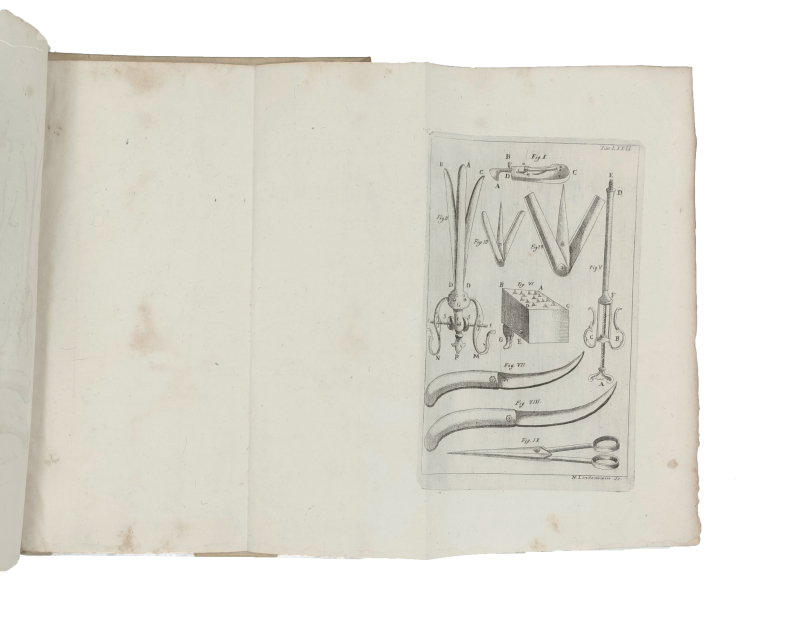
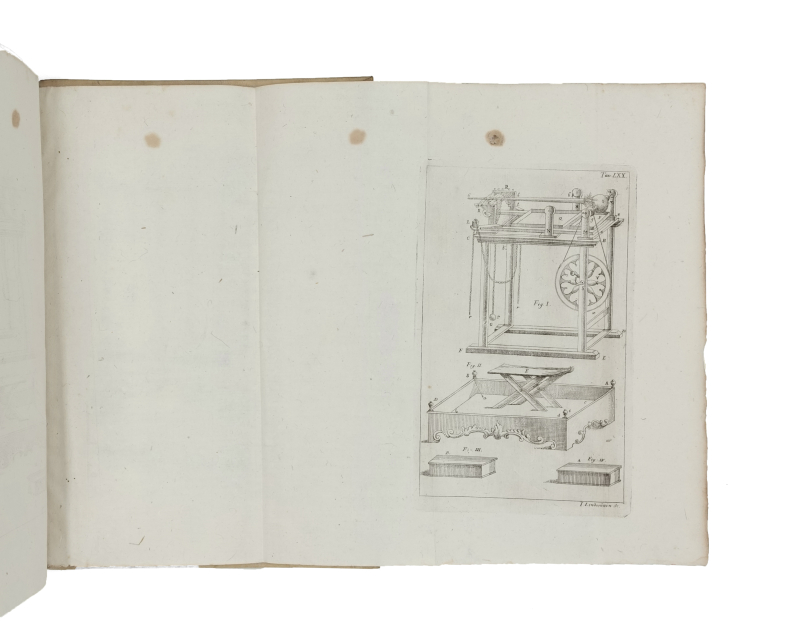
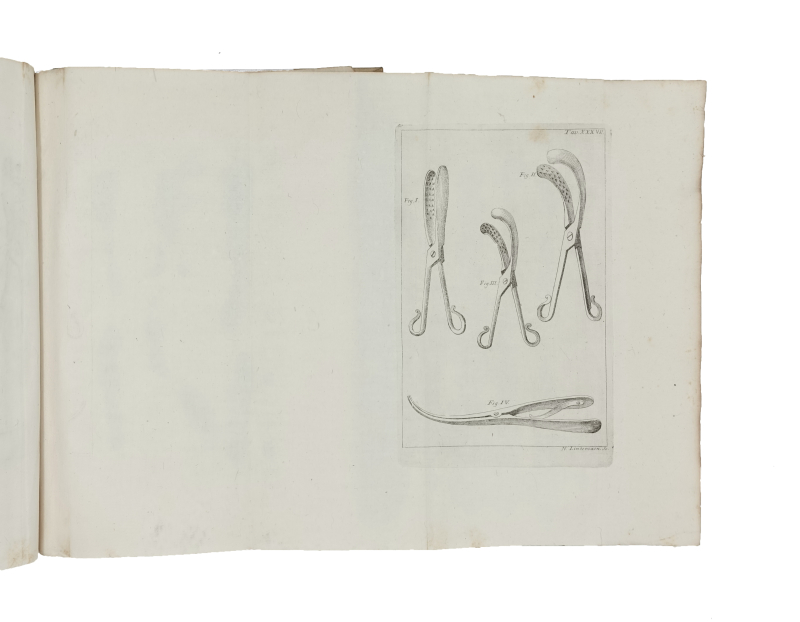
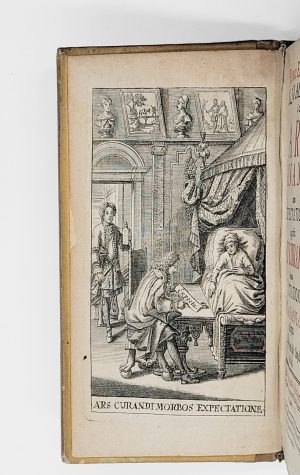
It is also illustrated with an engraved vignette on the frontispiece, the engraved coat of arms of the dedicatee, Niccolò de Conti Oddi, Archbishop of Ravenna (p. V), header vignettes, repeated tailpieces, and 72 beautiful fold-out medical plates at the end.
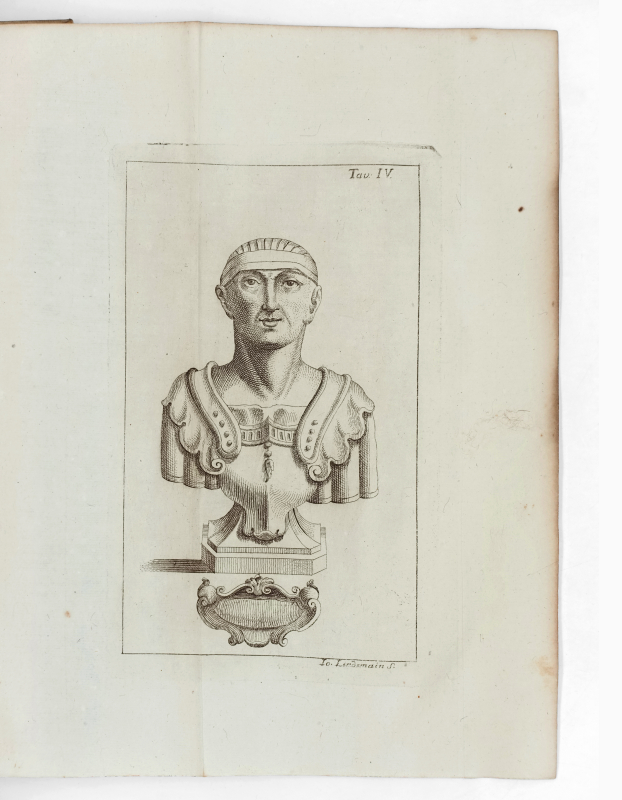
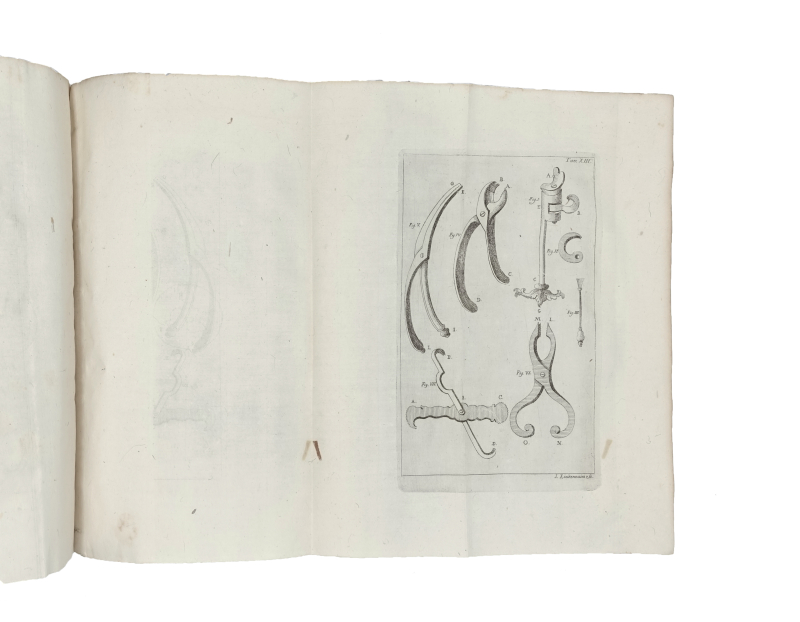
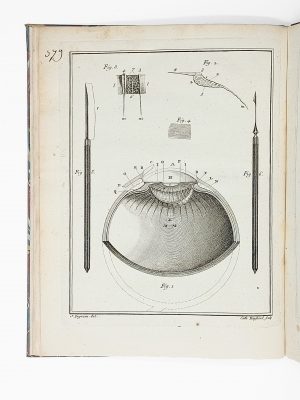
Most are signed by Giovanni Lindemain and offer a rich panorama of 18th-century surgical instruments and mechanical therapeutic devices: depth-adjustable trephines, ophthalmic instruments of great finesse, intricately shaped dental pelicans, mechanical scarifiers, screw-driven syringes, hospital beds, operating tables, chairs for the infirm, orthopaedic devices including the curious dragon-shaped exercise apparatus (pl. 29).
Beautifull illustrations: various bandages are presented draped over antique busts; the furniture, supports, handles and cuffs are in the Rococo style.
A rare volume, composed in the manner of the elaborate museum books of the late 18th century (such as, for example, the Vatican Museum catalogue, Il Museo Pio-Clementino, published by Giovanni Battista Visconti), combining an educational purpose with an aesthetic and curatorial aim.
A extremely fine copy, few scattered foxing spots.