Fairfax Murray (German), 333; Brunet, IV, 664-665 ; Dodgson : I, p. 505 (5) ; II, p. 5 (1) & 17 (2-31) ; Muther, 897 ; Proctor, 11031.
First edition. One of the most important illustrated German books of the early 16th century.
This narrative of the Passion, accompanied by prayers and commentary, is the work of the German publisher and physician Ulrich Pinder – no doubt printed on the press he had set up in his own home – and is illustrated by the finest Nuremberg draughtsmen and engravers of the time.
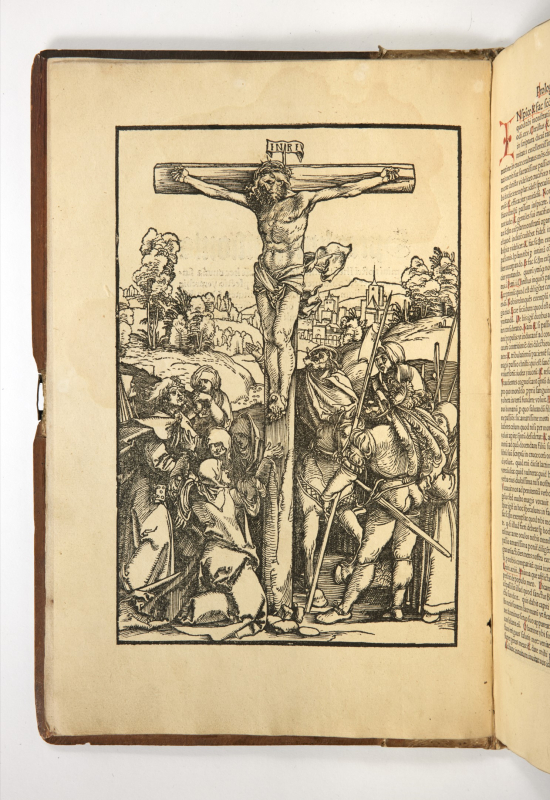
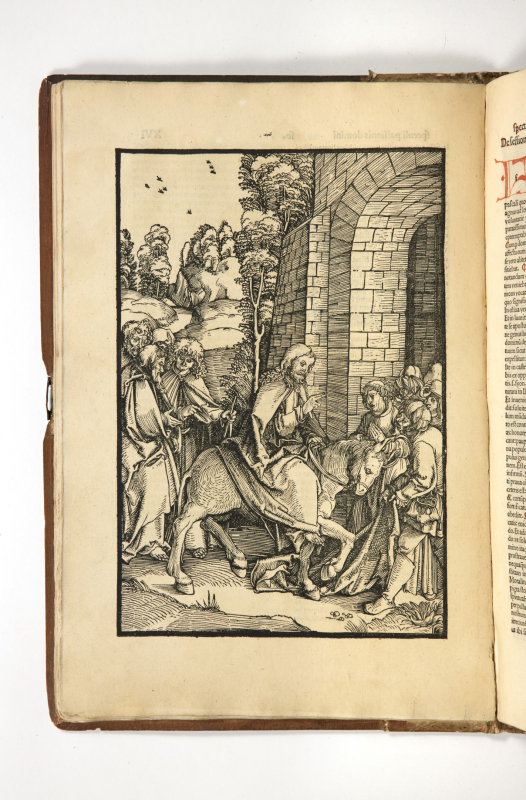
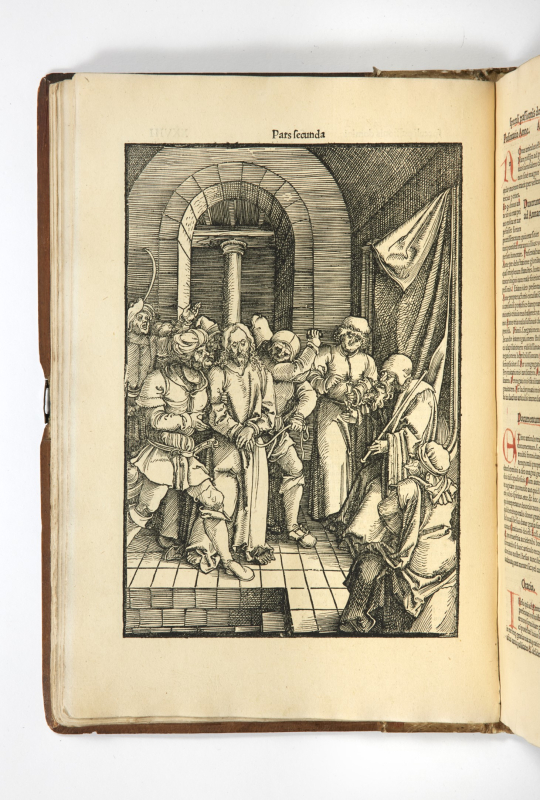
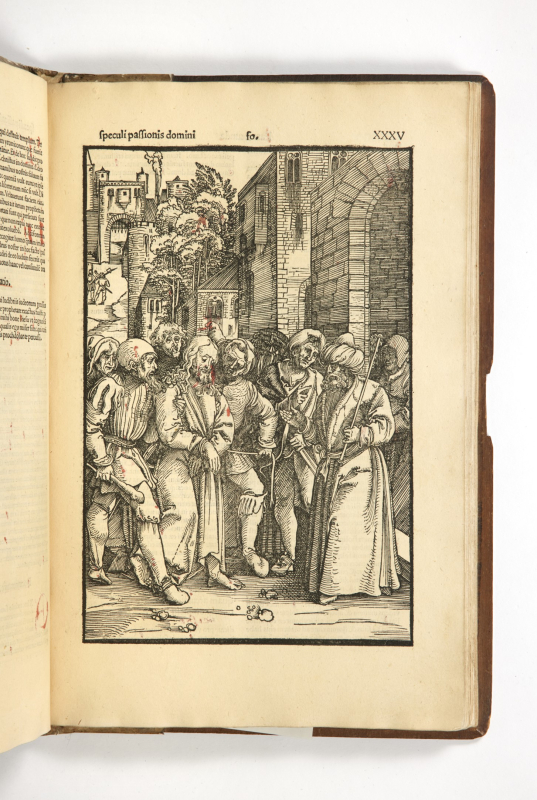
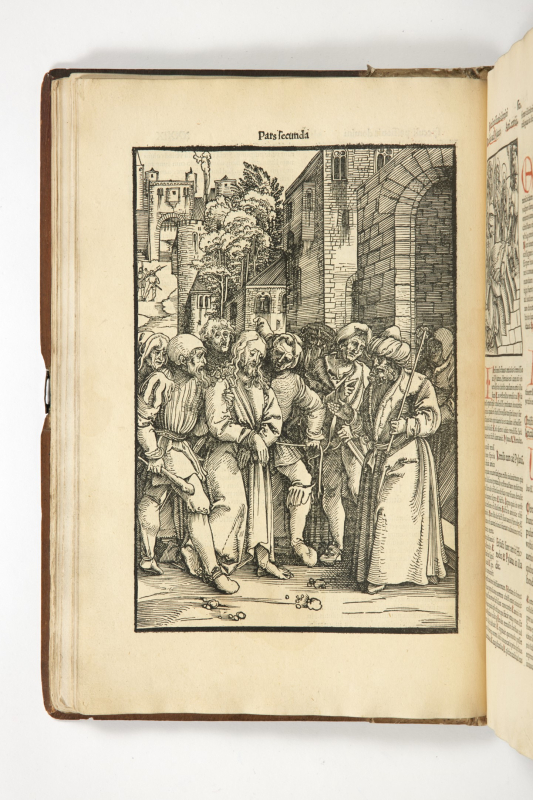
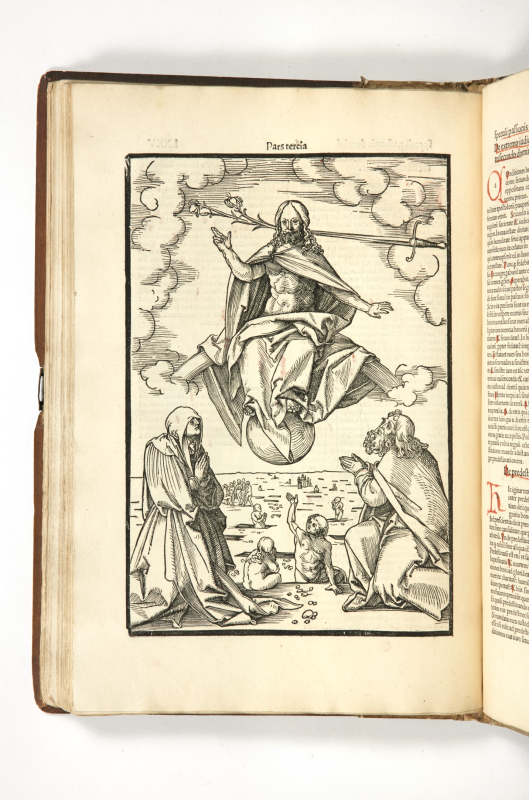
The magnificent illustrations include 78 woodcuts of which 40 full-page (5 are repeated) and 38 vignettes, the latter occasionally within woodcut borders.
Amongst the larger cuts 32 are by Hans Leonhard Schäufelein (v. 1480-v. 1540), apprentice and collaborator of Albrecht Dürer, who also worked with Hans Holbein. His woodcuts are used here for the first time.
“It is fairly evident that Schäufelein in several of these cuts was indebted to Dürer’s great Passion ; according to Dodgson he originally worked in Dürer’s studio and painted an altarpiece from the latter’s designs” (Hugh W. Davies, Fairfax Murray Cat.).
Some of the pieces engraved by Schaüfelein also reveal the influence of the work of the great Martin Schöngauer (c. 1448–1491), an artist admired by Michelangelo and whom Dürer would have liked to have studied under – a plan thwarted by Schöngauer’s untimely death.
Dodgson attributes two other woodcuts (A2v and L6) to Hans Baldung Grien (v. 1484-1545), who is known to have worked with Dürer in Nuremberg between 1503 and 1507
Rubricated copy, with initials and small letters in red
Provenance : Pietro et Giuseppe Vallardi, book sellers and publishers in Milan in the 19th century (library sticker) – O’Sullivan de Terdek, Bruges (armorial book plat with the motto “Modestia Victrix”).
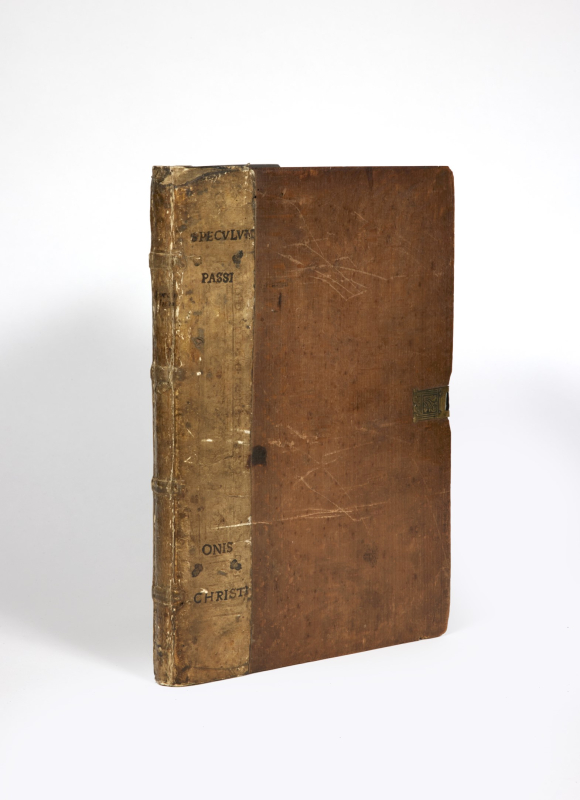
Fine copy with broad margined and in a fine, early decorated German binding.
Light wear and small restorations to spine, endpapers renewed in the 19th century.