Brunet III, 824; Mennessier de la Lance II, p.45.
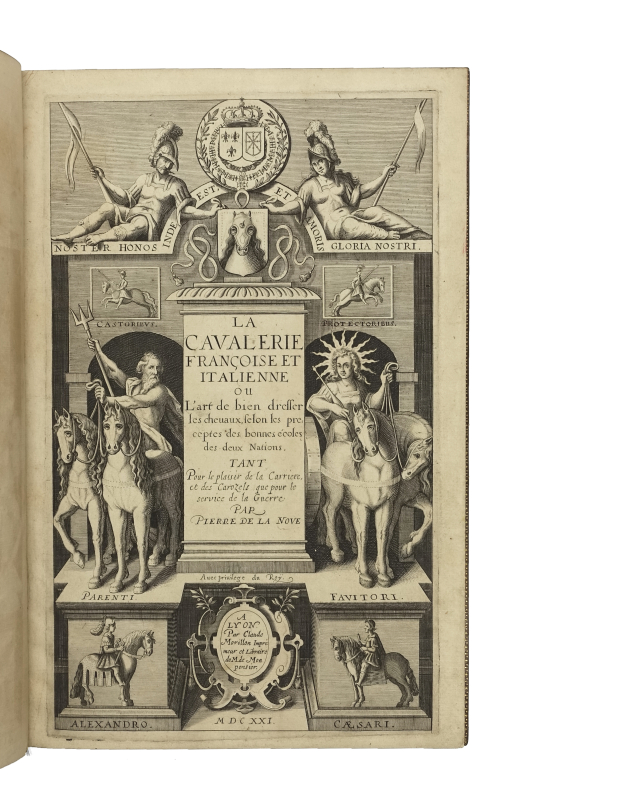
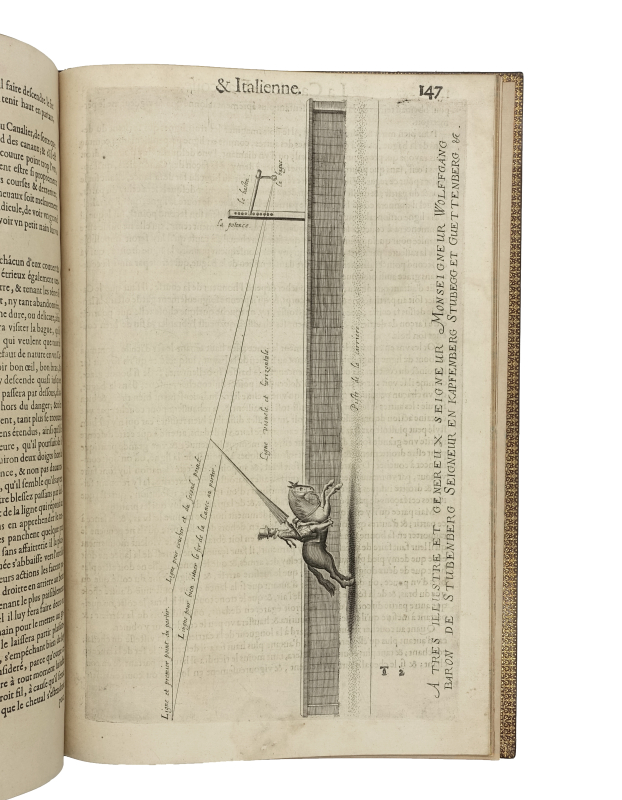
First edition, second printing dated 1621, with a beautiful engraved title page dedicated to Claude Morillon, of this rare and richly illustrated work on horsemanship.
This is the first volume in a planned series of four works devoted to horses and horsemanship, the last of which was never published. This work is notable for its chapters devoted to training horses for military purposes, in particular to accustom them to the noise and smoke of gunfire. As Mennessier de la Lance points out, La Noue describes the use of one or two posts in dressage, some three years before Pluvinel, who is generally credited with first publishing this technique.
Very little is known about Pierre de La Noue : « Gentilhomme et écuyer français, fin du XVIe et commencement du XVIIe siècle. Duplessis dit qu’il appartenait à une famille qui eut plusieurs écuyers du Roi aux XVIIe et XVIIIe siècles, mais qu’on ne sait rien de sa vie. Je n’ai pas été plus heureux que cet auteur, et n’ai pu découvrir aucun document biographique sur La Noue. On sait seulement qu’il n’avait aucune charge de cour, car il dit, dans sa Lettre aux Cavaliers qui forme la préface de son premier ouvrage : « ie ne dois pas, comme petit oysillon que ie suis, quitter la paix du village pour m’enuoler plus promptement que prudemment à la félicité de la cour ». » Mennessier de la Lance.
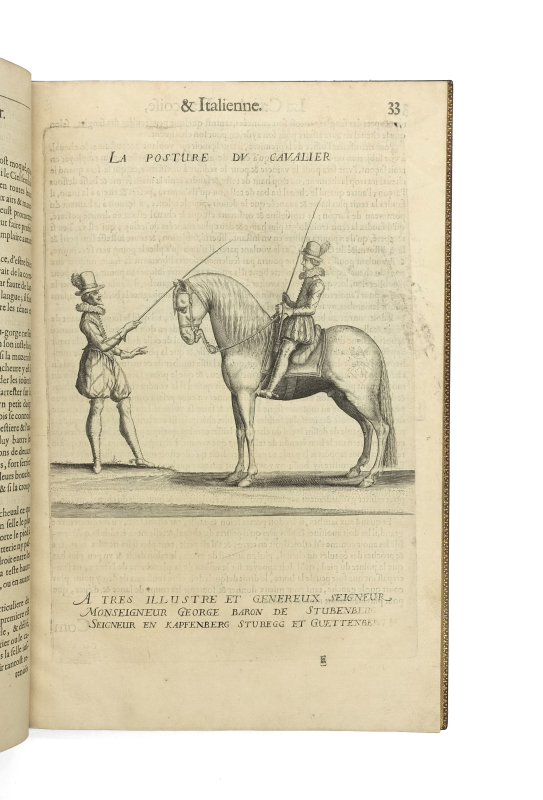
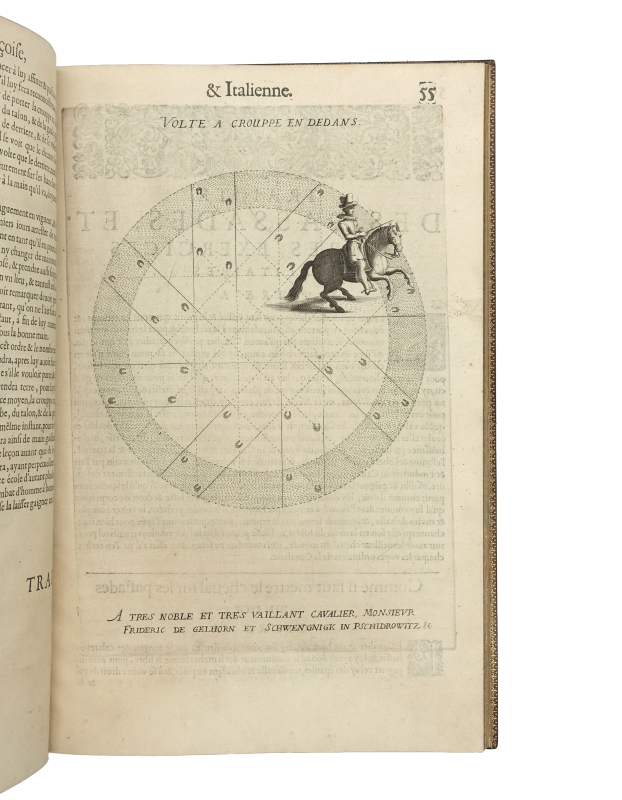
This fine volume is illustrated with a title page engraved by Jacob van der Heyden and 42 magnificent copperplate engravings within the text.
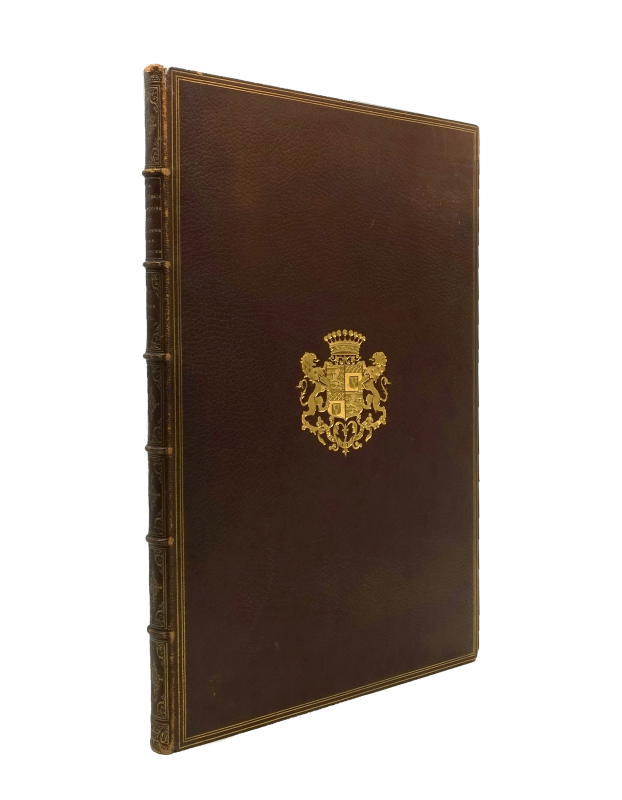
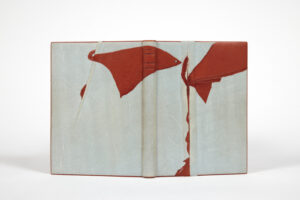
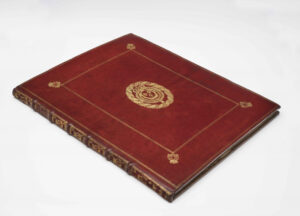
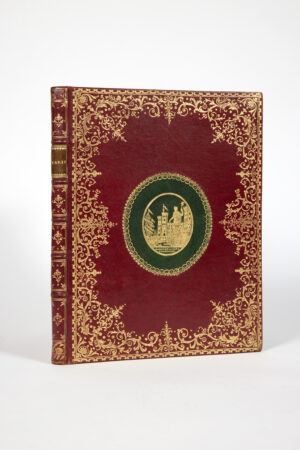
The upper hinge is worn, but this is a fine copy, washed at the time of binding, bearing the coat of arms of Count Pierre de Mornay Soult de Dalmatie (1837–1905), later Marquis de Mornay-Montchevreuil, grandson of Marshal Soult, with his motto ‘Arte et Marte’. His library, dispersed in 1874, contained numerous works on military art, horsemanship and heraldry, often bound by the great bookbinders of the time. A very fine copy, perfectly bound in morocco leather by Hardy-Mesnil.
Provenance: Count Pierre de Mornay Soult de Dalmatie (1837–1905) (coat of arms); Biblioteca do Jockey Club de S.Paulo (engraved bookplate).