Waller, 6524 ; Wellcome, 4283 ; see NLM, 3128 and Pritzel, 6113.
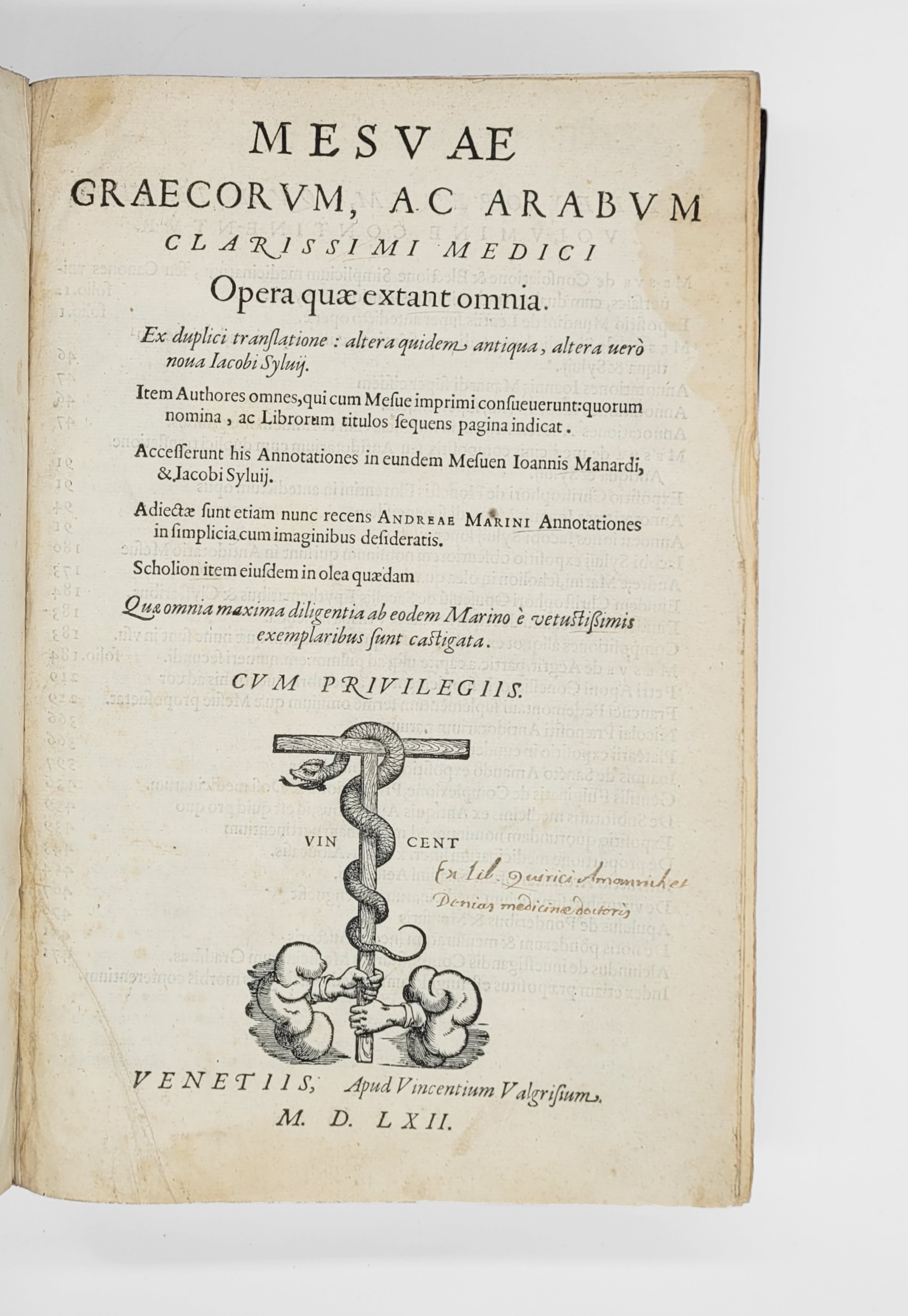
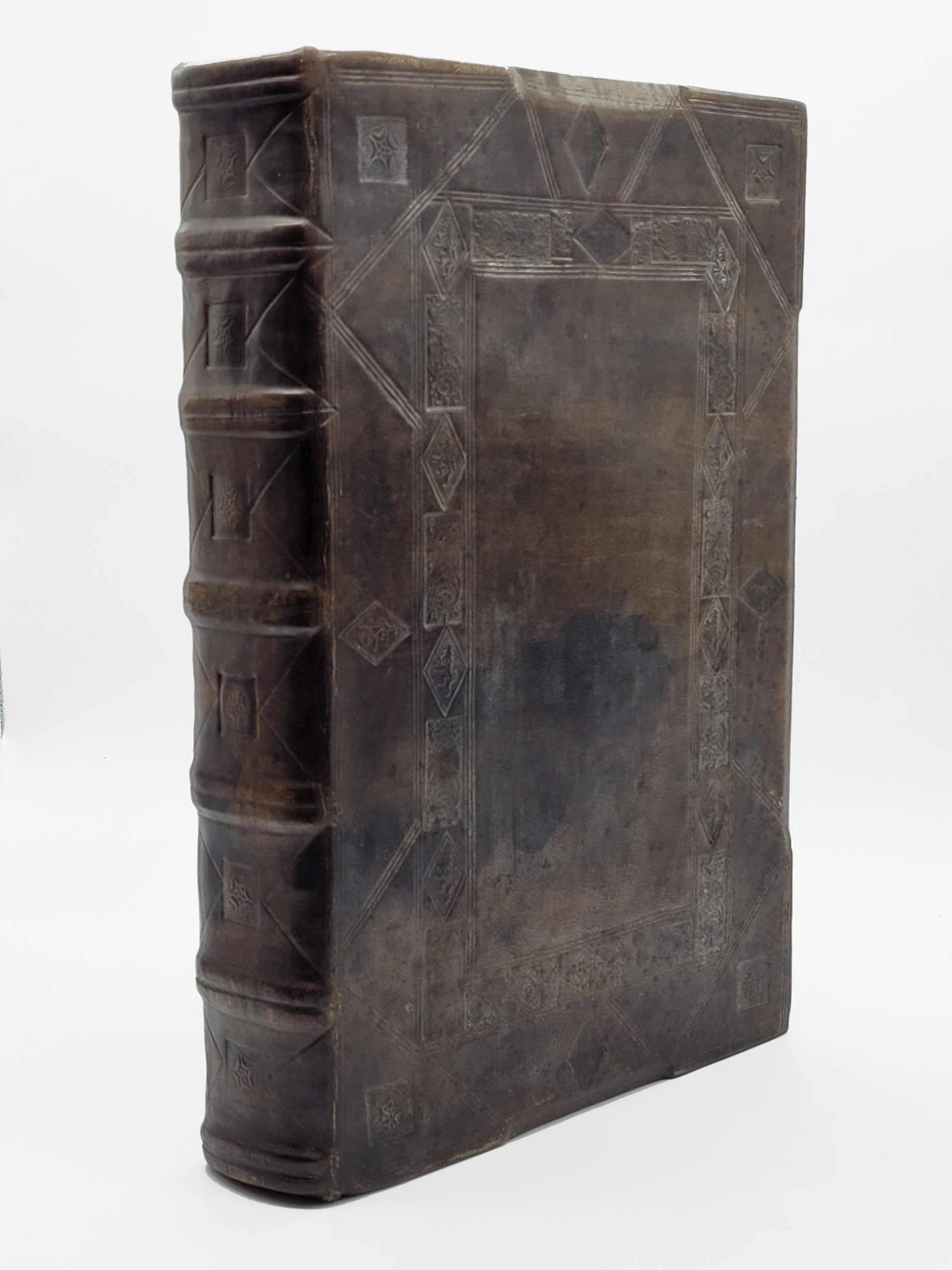
An excellent edition of Mesue’s medical and pharmaceutical works.
It was published in 1561 by Vincenzo Valgrisi, a printer and bookseller of French origin who was active in Rome and Venice, and one of the most illustrious Italian typographers of his time. The work was re-released the following year with a new title.
A Nestorian Christian from Damascus who settled in Baghdad, Yuhanna ibn Masawayh, Latinised as Mesue (c. 777-857), was the physician to six caliphs, including Harun al-Rashid and al-Mamun. He wrote works on gynaecology, ophthalmology and dietetics, as well as an important pharmacopoeia and a medical encyclopaedia, all of which are included in this volume.
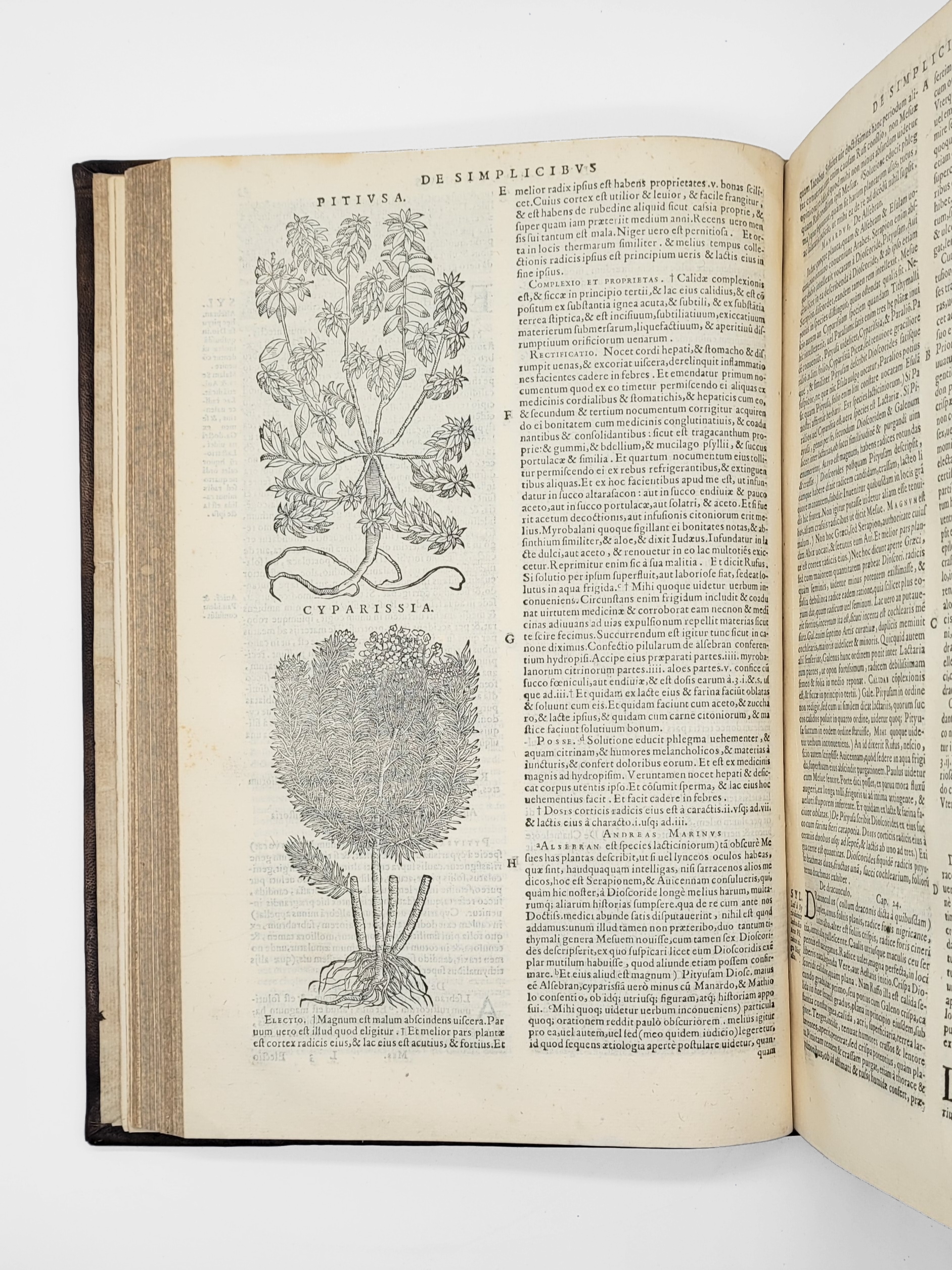
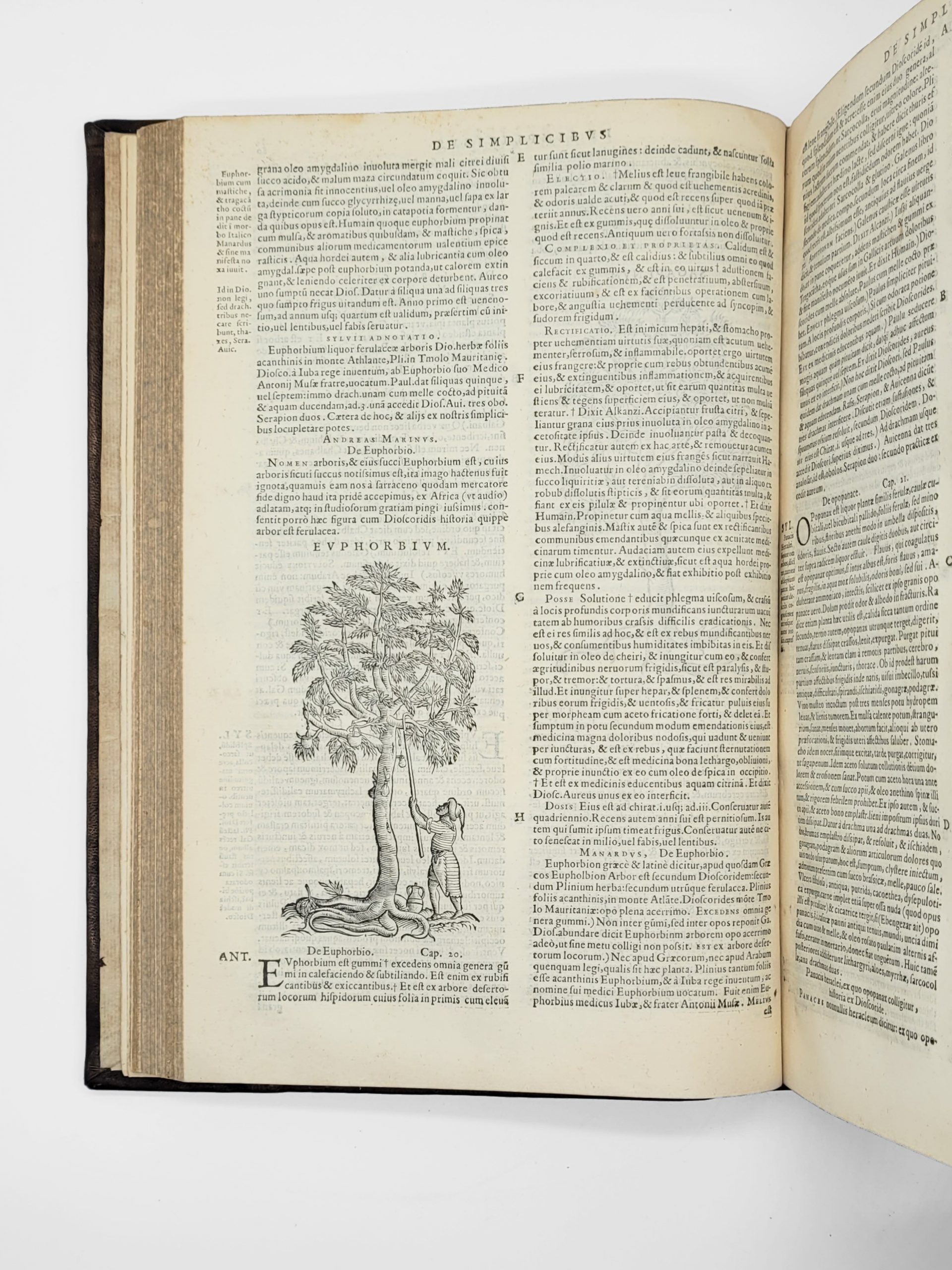
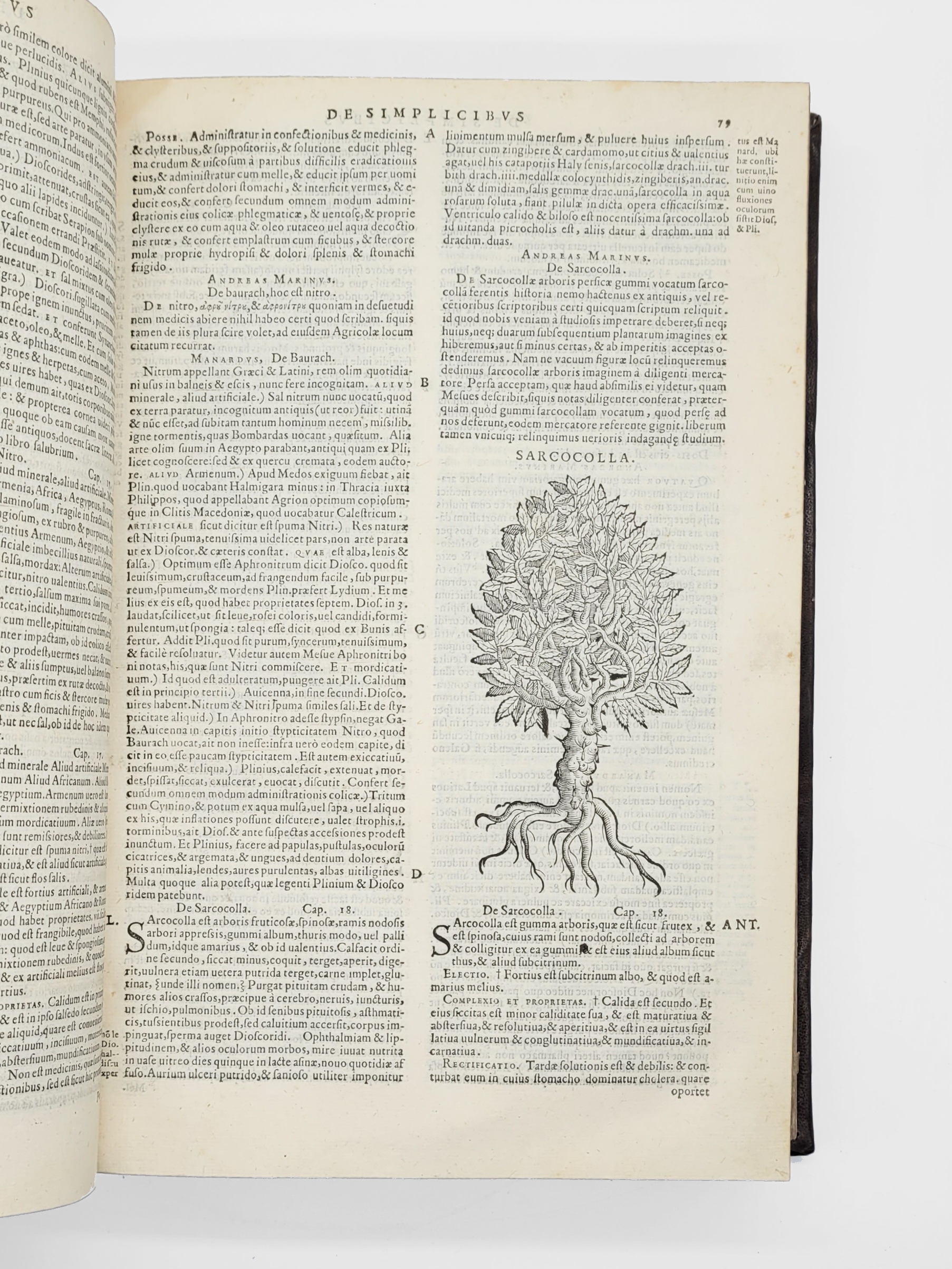
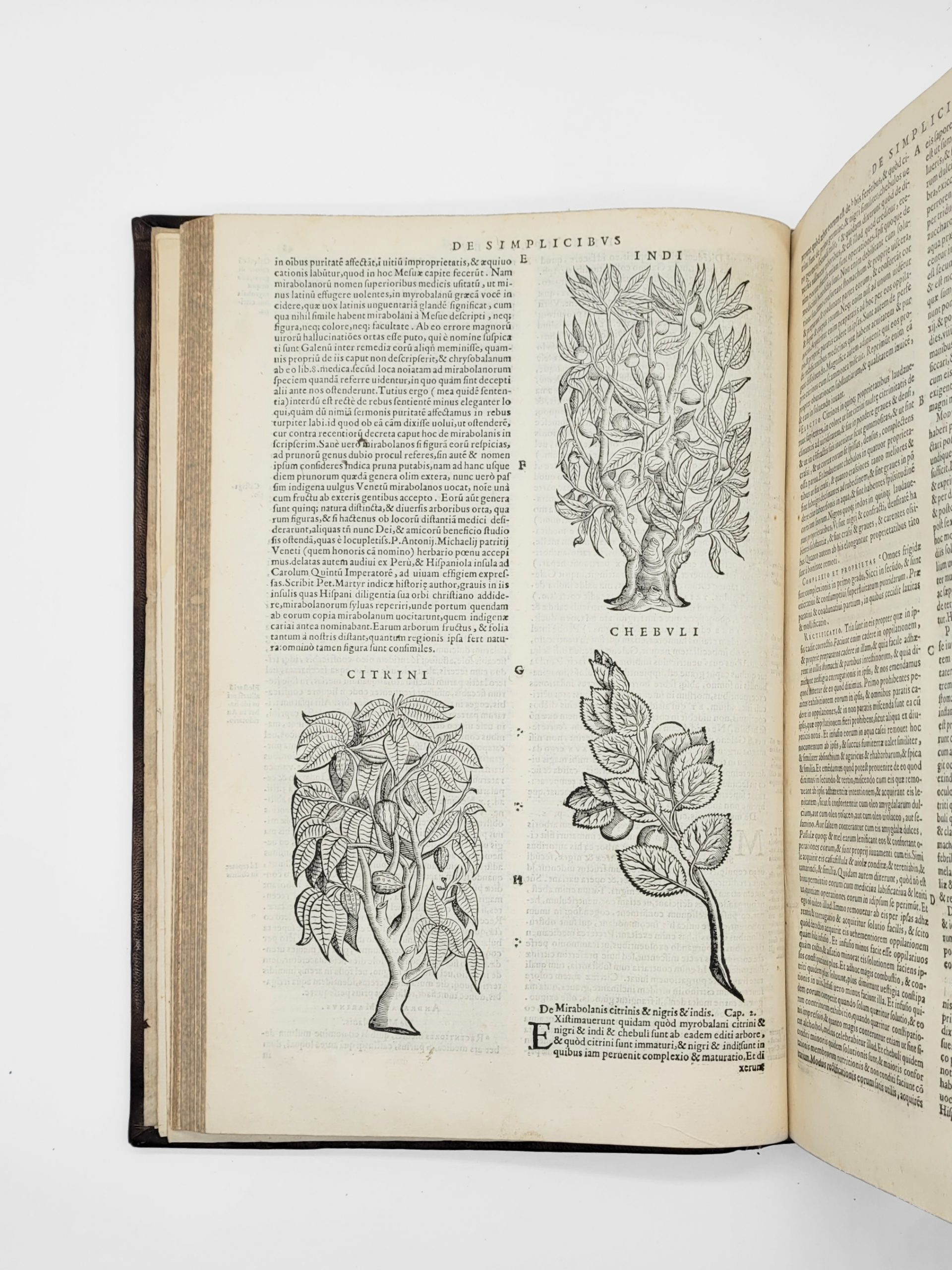
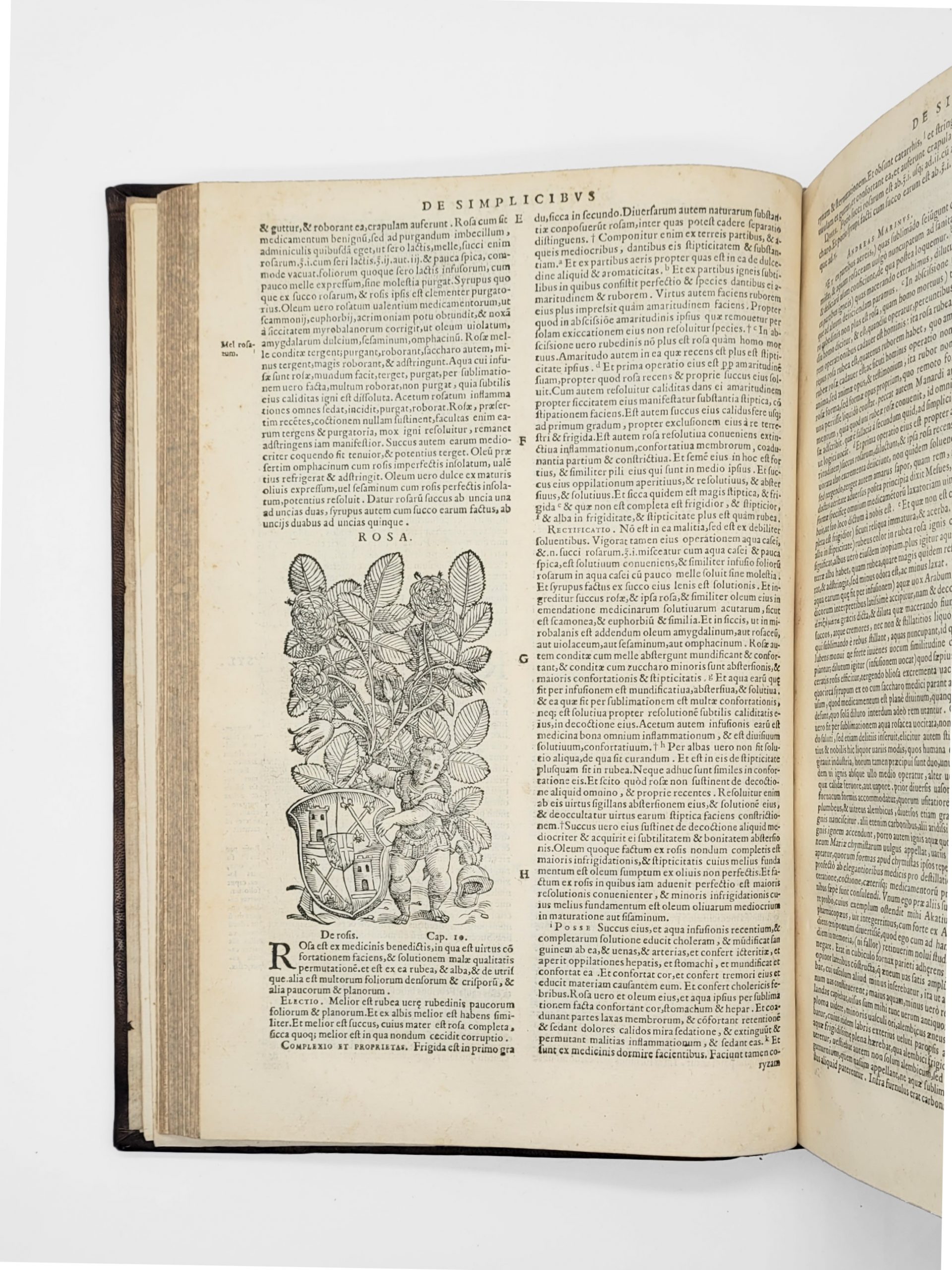
This impressive corpus is presented in two Latin versions: one ancient, known from manuscripts and incunabula editions, the other established by Jacques Dubois, in Latin Jacobus Sylvius (1478-1555), physician and anatomist, professor of chemistry at the Collège du Roy, an excellent Latinist, Hellenist and Hebraist. The commentaries are by Dubois himself and by the physician Andrea Marini, who died in Venice in 1570. The volume also contains notes by the physician, astrologer and naturalist Giovanni Manardi (1462-1536) on Mesuë’s Treatise on Simples and Grabadin Antidotarium, a manual compiled for use by apothecaries, which was considered throughout the Middle Ages to be the best compendium on drugs. Mesue’s texts are followed by important treatises on medicine and pharmacy, such as Francesco di Pedimonte’s Supplementum (on diseases of the chest, stomach, liver, intestines, etc.), Niccolò da Salerno’s Antidotarium (one of the most popular pharmacopoeias of the Middle Ages) with commentary by Jean de Saint-Amand, Cristoforo Onesti’s Expositio super Antidotarium Mesue, Pietro d’Abano’s treatise on breast tumours and diseases of the liver and stomach, and Saladino d’Ascoli’s Instructio aromatariorum, considered to be the first truly modern pharmacopoeia. The collection provides a fascinating insight into medieval medicine and its transformation during the Renaissance. The section devoted to simples (De simplicibus) is illustrated with 61 woodcuts in the text. Numerous initial letters.
A few minor stains and watermarks; repair in the inner margin of the first two ff. with slight damage to the first two letters of the dedication; scattered annotations in brown ink (old).
Handwritten bookplate in brown ink at the bottom of the title: ‘Ex. lib. quirici Amanrich et Denias medicinæ doctoris’; this is probably Dr Gr. Amanrich, born in Pia, near Perpignan, who died in 1708 and was the author of several medical treatises in Latin (cf. Quérard, I, 44). – Ex-libris Dr Maurice Villaret.