Cohen-de Ricci, 288.
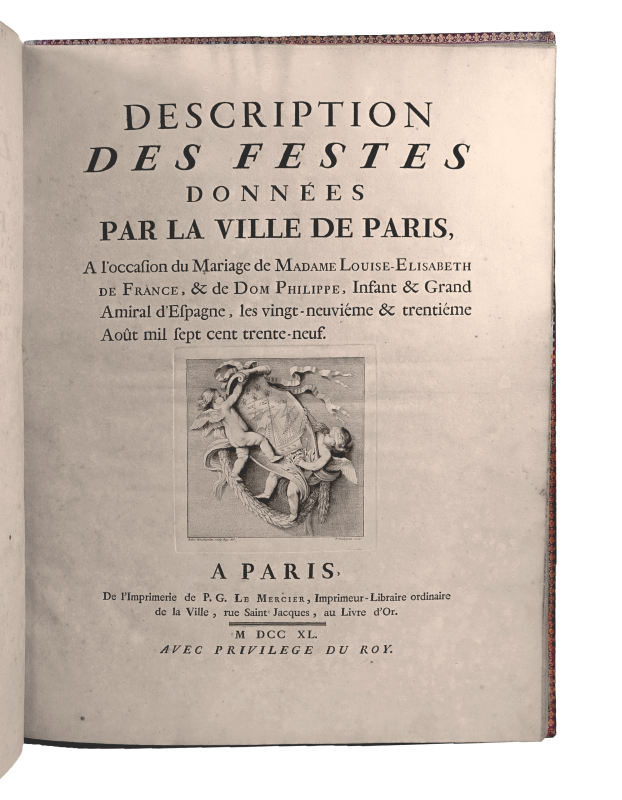
Only edition of this magnificent commemorative publication celebrating the marriage of Louis XV’s eldest daughter to the second son of Philip V of Spain in 1739.
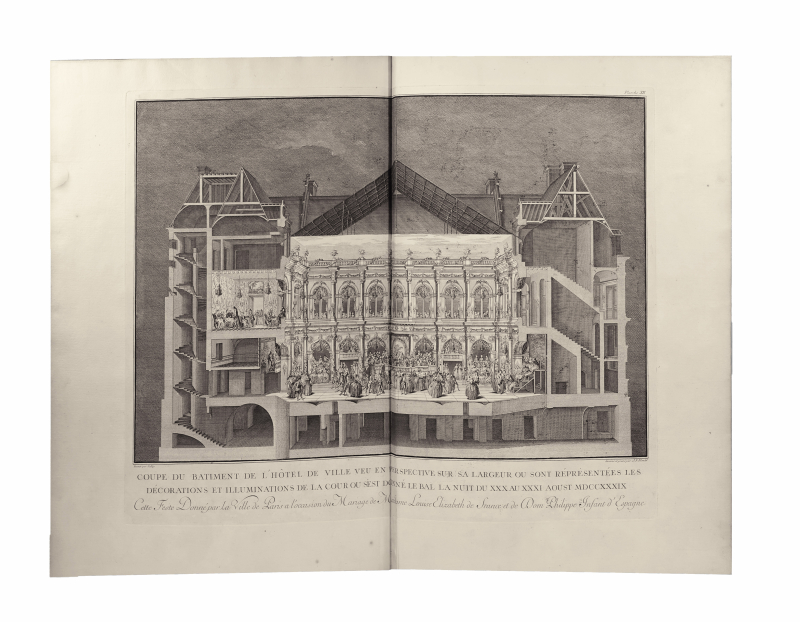
Marie-Louise-Élisabeth of France (1727–1759), known as ‘Madame Élisabeth’, was the eldest daughter of Louis XV and Marie Leszczynska. Born and raised at Versailles, she married her cousin Don Philip, the youngest son of King Philip V of Spain, at the age of twelve; he was 19 at the time. Their wedding was celebrated in two stages. First on 25 August in Paris by proxy – in the young man’s absence – then three months later in Alcalá de Henares, not far from Madrid, once the bride had travelled to Spain. The first of these two weddings was the occasion for spectacular celebrations in the French capital, culminating in a fireworks display over the Seine and a ball at the Hôtel de Ville.
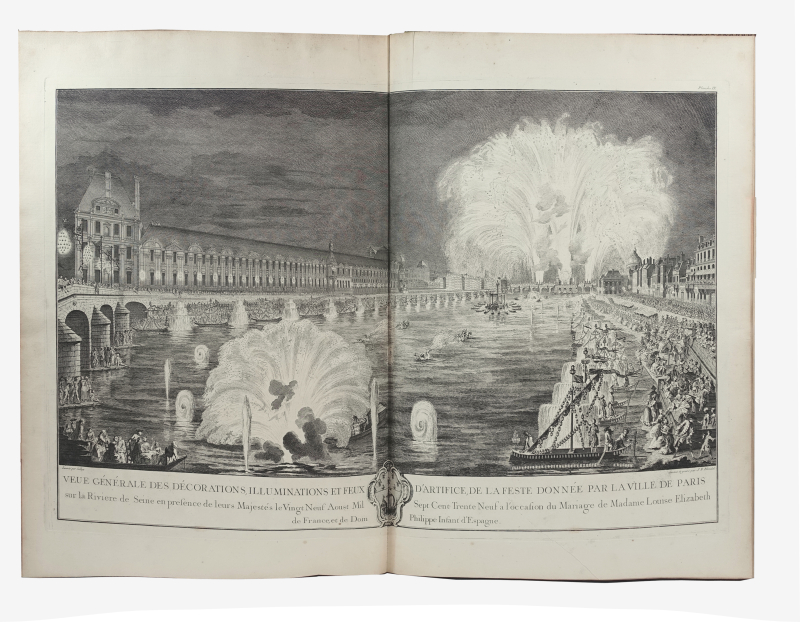
The event was celebrated on the Seine between the Pont-Neuf and the Pont-Royal, and the Florentine painter and architect Giovanni Niccolò Servandoni was commissioned to organise it. Temporary structures were designed and built for the occasion: a ‘Greek-style temple’ dedicated to Hymen, and a large hall in the middle of the Seine to accommodate the musicians.
The festivities began on the afternoon of 29 August with naval jousting matches between two teams, “each comprising 20 jousters and 36 rowers” (Mercure de France, September 1739, p. 2281). “As night began to fall, the illuminations came into view”, first at the Temple of Hymen, then on the terrace, along the quays, on the Pont Neuf and the Pont Royal.
Then, at the signal of the city’s cannons, a fireworks display was set off – first from the bridges, then from dozens of boats and positions on the sets. A masked ball was held the following day at the Hôtel de Ville.
Whilst the Mercure de France, filled with wonder, gave a dazzling description of a festival “remaining in the memory of more than 500,000 spectators”, it was at Turgot’s request that this work was published, with the aim of preserving the memory of the event through images. Turgot commissioned Jean-François Blondel to produce large-format engravings to commemorate the highlights of the festivities.
These remarkable intaglio illustrations include, in particular, a spectacular overview of the decorations at the moment of the fireworks display, which gives a sense of the scale of this celebration, one of the most significant of the century.
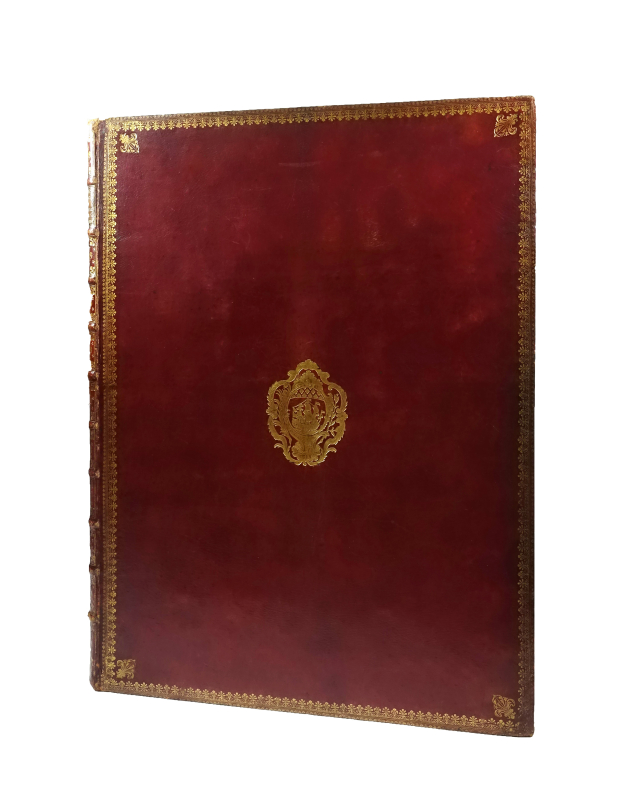
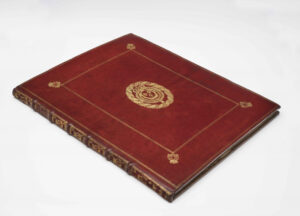
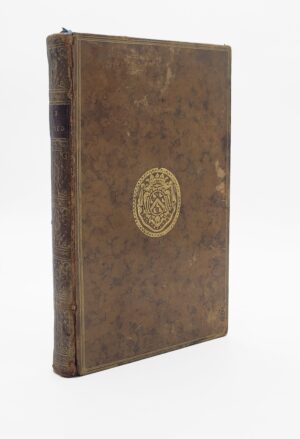
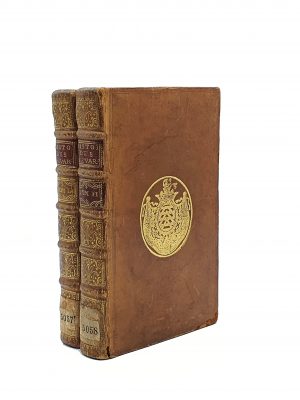
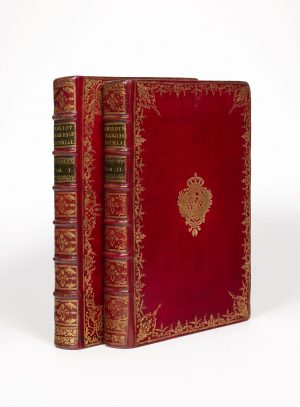
The bookseller Le Mercier published 1,400 copies of the work, most bound in calfskin or morocco leather bearing the coat of arms of the City of Paris (such as our copy), which were presented to members of the royal family and prominent figures.
A few scattered foxing spots and a tear in the binding; nevertheless, a fine copy of this spectacular book.