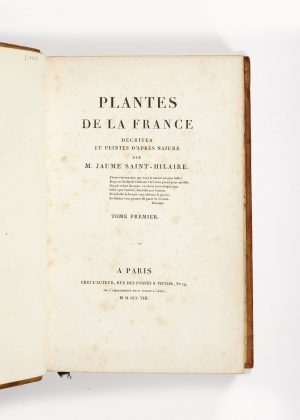
Hunt, 208 ; Nissen, 13 ; Pritzel, 1590.
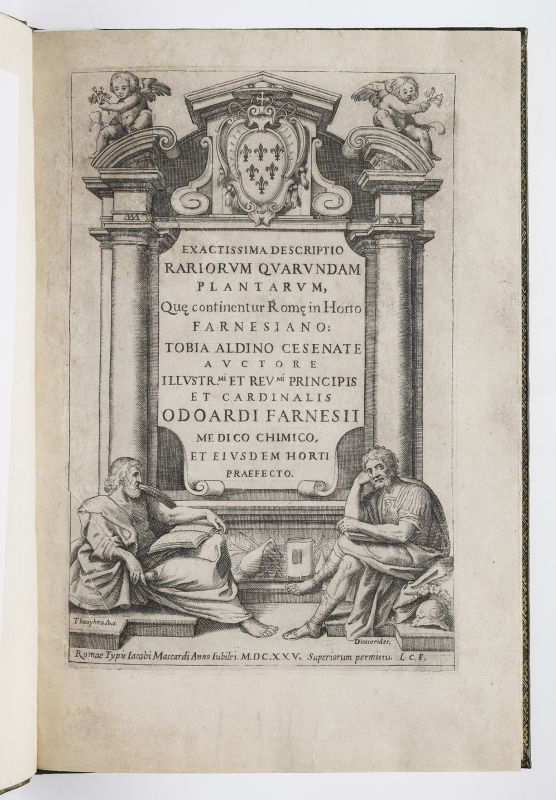
First edition. Illustrated with one engraved title showing an architectural frame with the seated figures of Teofrastus and Dioscorides at the base of the monument and the coat-of-arms of the Farnese family at the bottom with two putti holding flowers, 22 full-page engraved plates and 6 woodcuts in text.
Published under the name of Tobia Aldini, prefect of the Farnese gardens in Rome in the service of Cardinal Odoardo Farnese (1573–1626), this work is in fact largely the work of his friend Pietro Castelli (1570–1661), who was a student of Andrea Cesalpino before attaining the title of publico Semplicista of the Orti Vaticani.
Aldini truly distinguished himself through his management of the Farnese Gardens on the Palatine Hill, which quickly came to be counted among the most beautiful in Rome and were the subject of studies and publications by the greatest botanists of the time, such as Giovanni Battista Ferrari (1584–1655) and Fabio Colonna (1567–1640). Aldini was also an alchemist, pharmacist and doctor of medicine. His approach to botany was influenced by his related fields of knowledge; thus, in this work, the botanical description of the plants is accompanied by their medicinal properties.
“Aldini presents various rare plants from the unique collection of the Farnese family, which, due to its close ties with the Jesuit Order, frequently obtained seeds and specimens of exotic plants from priests returning to Rome after long periods abroad. The enthusiasm with which these plants were received in Rome during the first decades of the seventeenth century is well documented: new species were avidly sought after and grown in private gardens, constituting objects of prestige to be vaunted in cultivated circles” (Oak Park Flora).
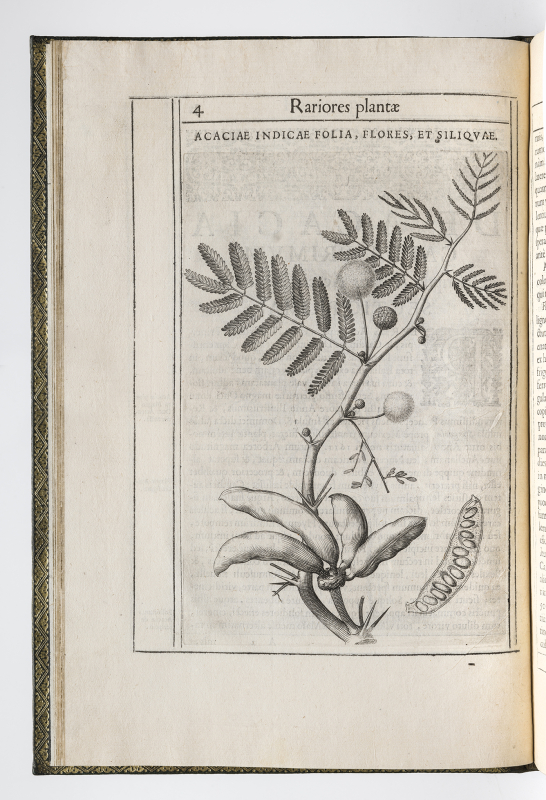
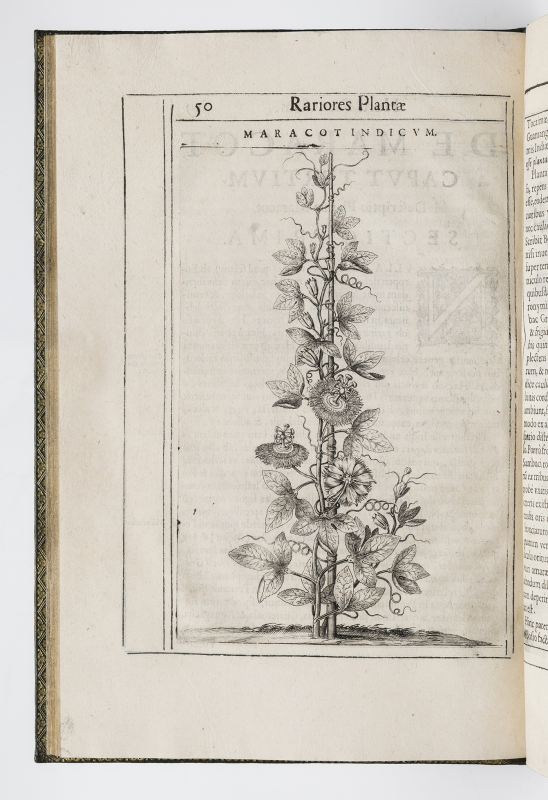
This work comprises sixteen chapters, each devoted to a single plant. It includes a description of the specimen, its medicinal and culinary properties, accompanied by an illustration. Aldini devotes his first chapter to the cassia tree, then describes the passionflower, Jerusalem artichoke and the aloe-leaved yucca, also known as the Spanish bayonet.
Washed copy; page 27 incorrectly numbered 37, page 30 incorrectly numbered 40 (in accordance with Hunt and the digitised copies); upper corner of the margin on page 85 restored.