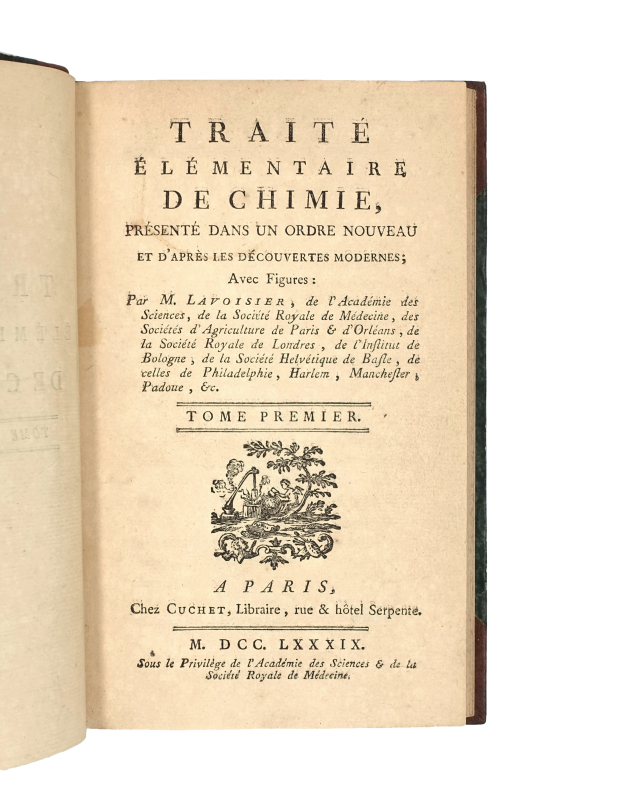
LAVOISIER Antoine-Laurent de Traité élémentaire de Chimie, présenté dans un ordre nouveau d’après les découvertes modernes.
VENDU
Paris, Cuchet, 1789
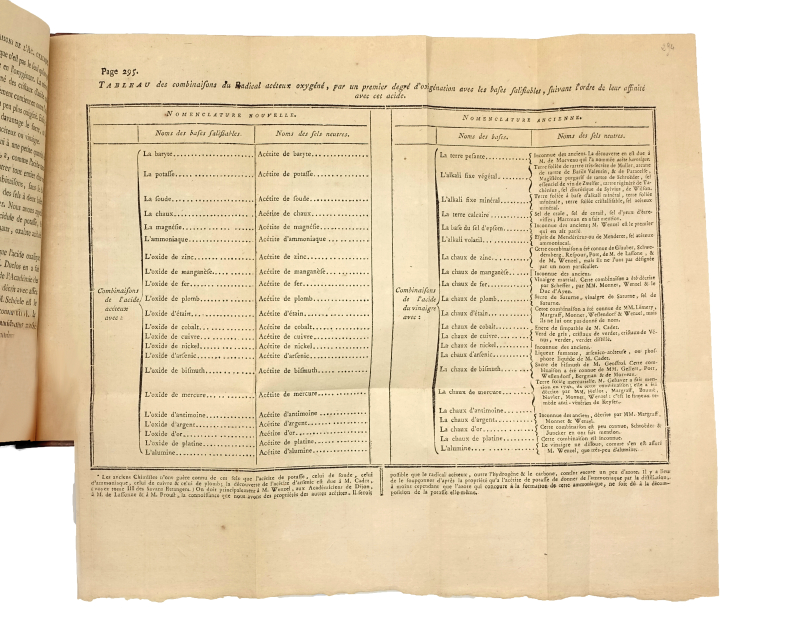
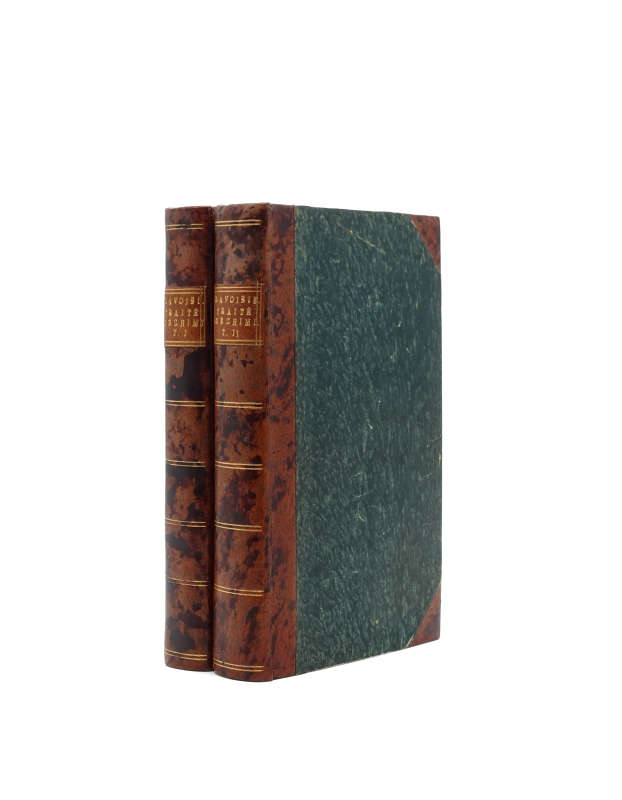
2 volumes 8vo (187 x 117 mm) of XLIV, 322 pp., 2 fold-out charts for the volume I ; VIII, pp. 323 à 653, 1 un.l. (errata), 13 engraved plates for the volume II. Half sheepskin with corner, flat spine, title piece in brown morocco (modern binding).
Duveen et Klickstein, 154; En français dans le texte, 184 ; PMM, 238; Horblit, 64.
First edition, second printing (only a few copies of the first printing are known to exist).
Le Traité élémentaire, regarded as the first modern chemistry textbook, presents a unified view of the new chemical theories. It provides a clear account of the law of conservation of mass and refutes the existence of phlogiston.
Lavoisier clarifies the concept of an element as a simple substance that cannot be broken down by any known method of chemical analysis, and devises a theory of the formation of chemical compounds from elements.
His work contains a list of the 23 elements (also called ‘substances’) that could not be broken down further, including oxygen, nitrogen, hydrogen, phosphorus, mercury, zinc and sulphur.
“This book accomplished a chemical revolution” (PMM)
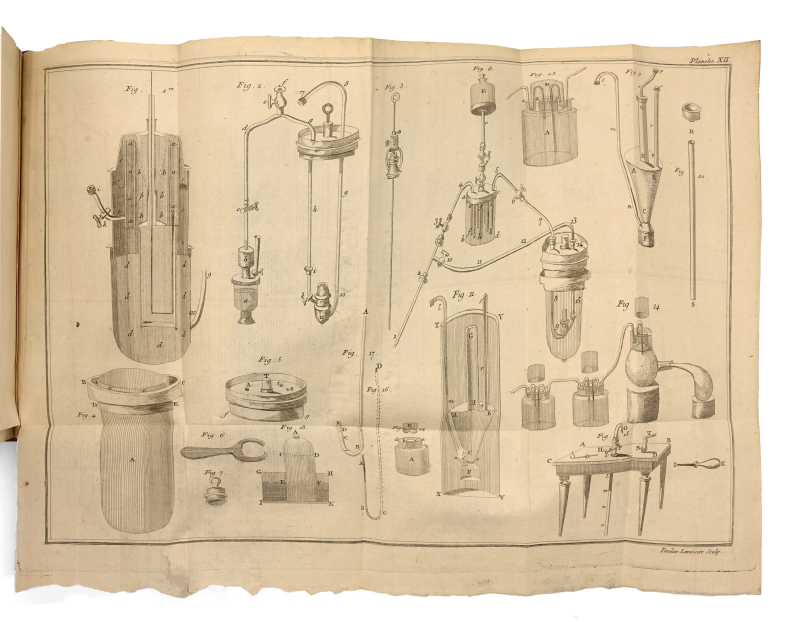
Thirteen plates illustrate the volumes and depict various instruments and experiments. They were engraved by Marie-Anne Pierrette Paulze, the chemist’s wife and assistant.
Previous paper restoration on the last leaf of Volume I.