Brunet, III, 1008; Carteret, III, 388; Cordier, 117-60; Vicaire, V, 245; Fléty, 53.
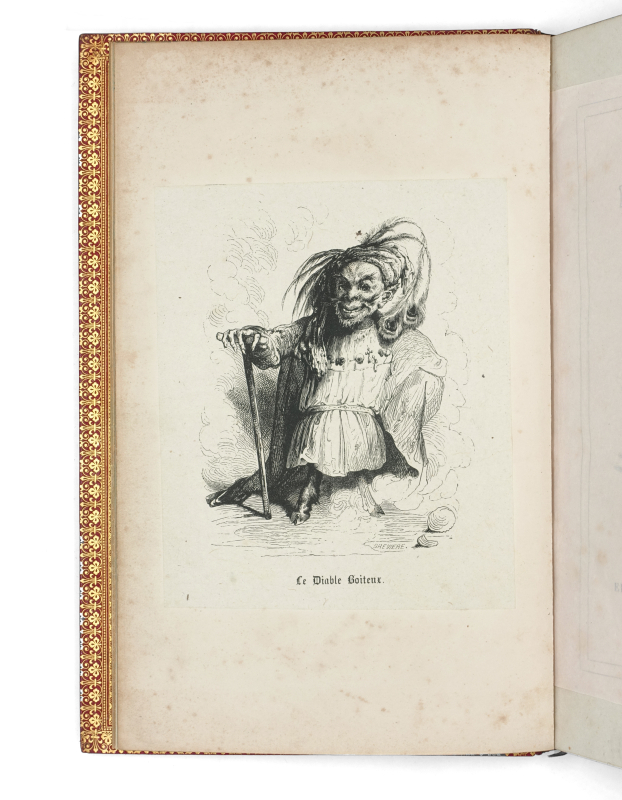
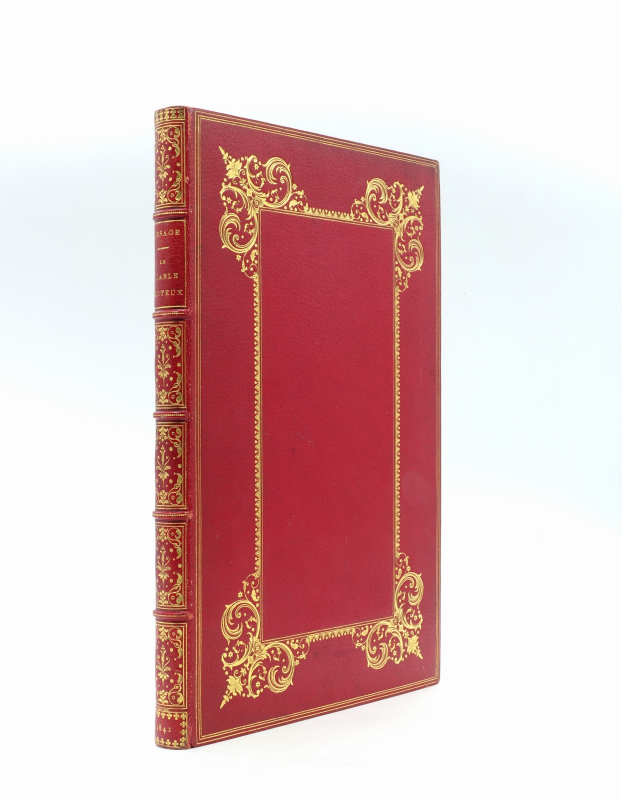
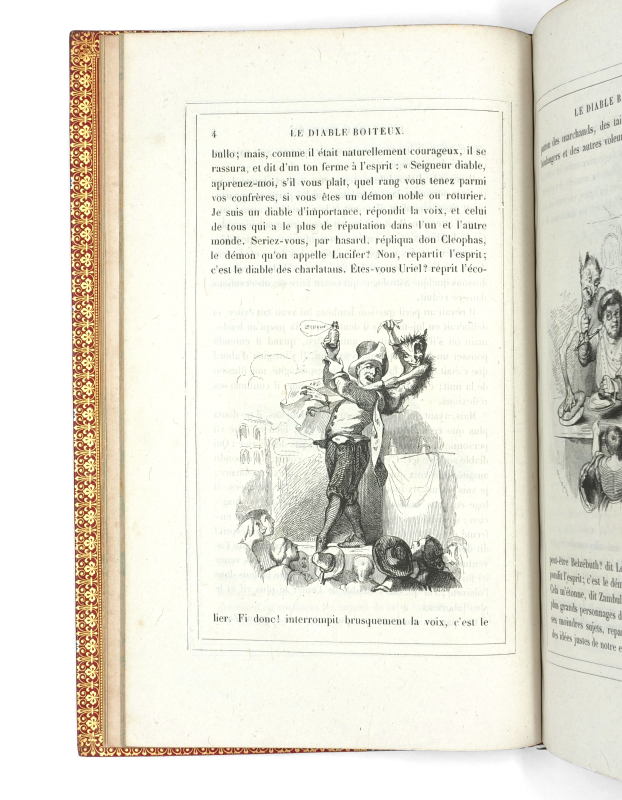
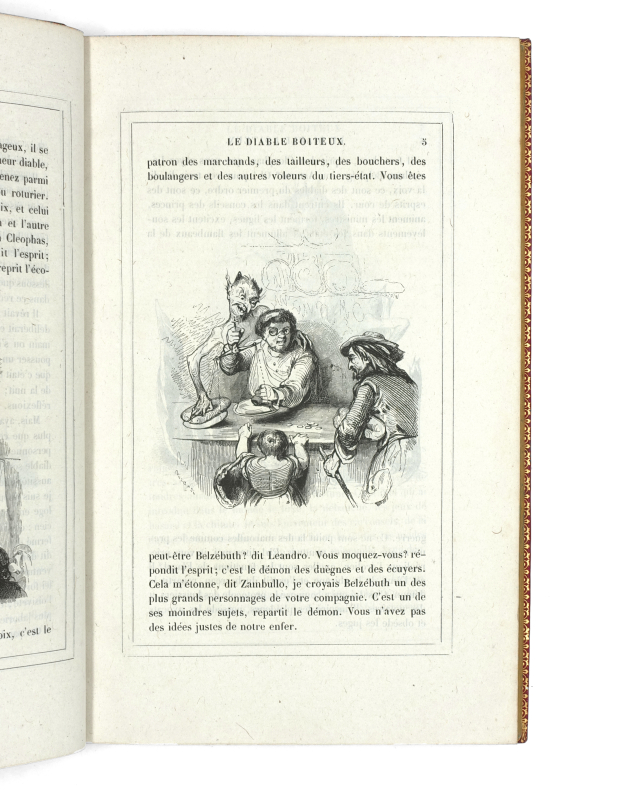
Rare copy on china paper of the reprint of the 1840 edition, illustrated with a full-length portrait of Le Diable boiteux engraved by Brevière, printed on china paper pasted down, and 140 vignettes in the text by Tony Johannot.
As was often the case in the 19th century, this work was first published in installments. A number of novels that were successful in the 18th century were periodised and offered to the public in issues. Once the entire work had been published, it was possible to have it bound by the publisher.
Le Diable boiteux represents a form of continuity between the 18th and 19th centuries. It is a story of diablerie and enchantment sprinkled with morality. The Wise Man brings in the demonic figure of Asmodeus, who uses a variety of spells. These elements had everything to appeal to the nineteenth century, which was striving to create a French fantasy.
The very first use of the term ‘genre fantastique’ occurred in 1798 in an article in La Décade philosophique, littéraire et politique, which was based on the work of Le Sage (no. 17, 30 December 1798).
The story and its characters offer Tony Johannot a range of possible representations, which he sets about putting into image. As always, the airs are marked, his devil is expressive, repulsive with an air that is sometimes malevolent and sometimes mocking. He accentuated the demonic characteristics, and the face was made up of nothing but angles: the nose, chin and horns were constructed in a series of sharp shapes that exacerbated the character.Johannot also had fun twisting his Asmodeus in all directions.He often embraces Cleofas, the hero of the novel, suggesting a diabolical hold. The headbands, lettrines and endpapers are just as elaborate as the vignettes, making the book dynamic and rich.
Pages 41 and 43 are shorter.